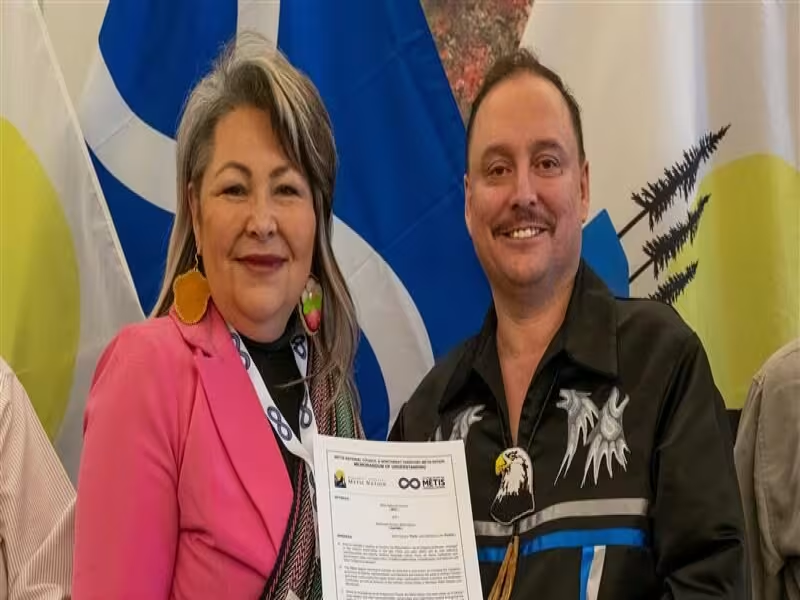
SHERIDAN, WYOMING – April 14, 2026 – The Métis National Council, which has served as the national and international voice of the Métis Nation since 1983, has introduced Victoria Pruden as its new President while reaffirming its mission to advance Métis rights, recognition, and self-determination across the Homeland. The Council operates as a National Indigenous Organization, carrying out advocacy, convening, and policy and research work on behalf of Métis governments in Canada and internationally. Pruden — a proud Michif Iskwew (Métis woman) and dedicated leader with deep ancestral ties to the Métis Nation — has committed to ethical leadership and transparency as her guiding principles. Her arrival at the helm marks a continued focus on honoring the legacy of Métis ancestors and the vision of Louis Riel.
The Council's Four Decades of Advocacy
Since 1983, the Métis National Council has operated as the primary national and international voice of the Métis Nation, providing structured representation for Métis governments across Canada. The MNC's founding gave the Métis Nation a formal institutional presence through which to engage policy processes, press for rights recognition, and ensure Métis communities could participate in decisions that affect their lives. Guided by the legacy of Métis ancestors and the enduring vision of Louis Riel, the Council has maintained that mandate for more than four decades without interruption.
That continuity carries real weight. Building a consistent record of advocacy and research over more than 40 years means the MNC can approach governments and international bodies from a position of established credibility, rather than starting from scratch with each new administration or policy cycle. For Métis citizens, that institutional stability translates into a more experienced and reliable advocate working on their behalf at every level.
What the MNC Does
The Métis National Council's mandate spans three core functions: national and international advocacy, convening, and policy and research. Through advocacy, the Council advances Métis rights and recognition at levels of government where individual communities may have limited direct access. The convening role brings Métis governments together, aligning priorities and ensuring the national voice of the Métis Nation remains coordinated and clear.
Policy development and research form the third pillar. Evidence-based policy positions allow the MNC to engage in substantive, credible negotiations and strengthen the case for Métis rights in formal settings. Together these three functions create a mutually reinforcing approach: research supports advocacy, advocacy shapes policy, and convening ensures that Métis governments across the Homeland remain aligned on shared priorities.
President Victoria Pruden
Victoria Pruden now leads the Métis National Council as President. A proud Michif Iskwew — the Michif term for Métis woman — and a mother and dedicated leader, Pruden brings deep ancestral ties to the Métis Nation to her role. She has centered ethical leadership and transparency as the cornerstones of her presidency, framing both values as essential to advancing Métis self-determination while honoring the voices of Métis citizens across the Homeland.
Her connection to the legacy of her ancestors places her leadership within a long line of Métis advocates who have shaped the Nation's path. By emphasizing transparency, Pruden signals an intention to keep the Council's work and decision-making visible and accountable to the communities it serves — not only to government partners and international bodies. That internal accountability is as important to self-determination as any external advocacy effort.
Why It Matters
For Métis people across Canada, the Métis National Council is the institutional expression of a nation's right to speak for itself. The MNC's work directly shapes how Métis rights are framed, negotiated, and recognized at national and international levels, affecting policy decisions on recognition, community support, and self-determination that touch the daily lives of Métis citizens across the Homeland.
For Canadians more broadly, the Council's sustained presence over more than four decades reflects the importance of Indigenous peoples having their own institutional voice rather than relying solely on external representation. Organizations like the MNC exist because self-determination requires self-representation — guided by community values, ancestral legacy, and the lived experience of citizens across the Homeland. Under President Pruden's leadership, that principle remains the foundation of everything the Council does.
The Métis National Council's long record of advocacy, now entering a new chapter under President Pruden, continues to demonstrate how Indigenous self-determination can be pursued through organized, evidence-based, and community-rooted institutional representation.