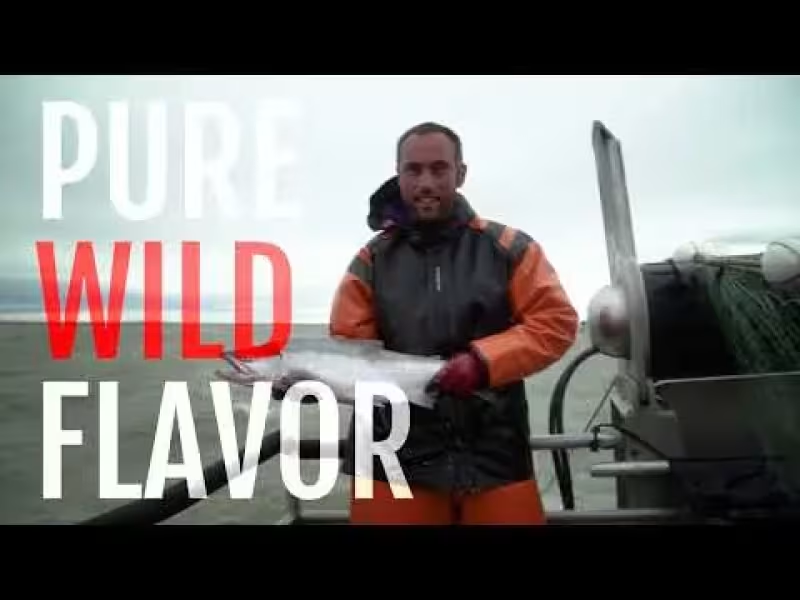
Anchorage – October 06, 2026 -- Alaska fishermen hauled in 30 million wild sockeye salmon from Bristol Bay this summer, as the region marks National Seafood Month by pointing consumers to an online Fish Finder tool to buy the catch directly from fishermen or locate retailers nationwide.
Bristol Bay in western Alaska is the world's largest source of wild sockeye salmon, a fishery that supports roughly 8,000 commercial fishermen and drives economic activity across rural Alaska communities. Salmon is already the second-most consumed seafood in the United States.
Independent testing finds no detectable microplastics in sockeye samples
An independent analysis conducted earlier this year measured the nutritional content of Bristol Bay sockeye, finding that a single 113-gram serving delivers 23 grams of protein, 163% of the daily value for vitamin D, and 56% of the daily value for selenium. Researchers detected no microplastics in any of the samples tested.
Comparison with farmed salmon shows sharp nutritional gaps
Against USDA reference data for farmed Atlantic salmon, Bristol Bay sockeye contained 40% more EPA omega-3, 2.6 times more vitamin D, and 4.3 times more calcium. Lilani Dunn, Executive Director of the Bristol Bay Regional Seafood Development Association, said the results confirm what fishermen have observed for generations about the fish's quality, calling it a product shaped by one of the most pristine ecosystems on Earth.
Doug Morgan, a longtime Bristol Bay fisherman and president of the association, said buying or ordering the sockeye connects consumers to the fishery and the communities that depend on it. The fish travel long distances back to Bristol Bay each summer before fishermen catch and ship them across the country.