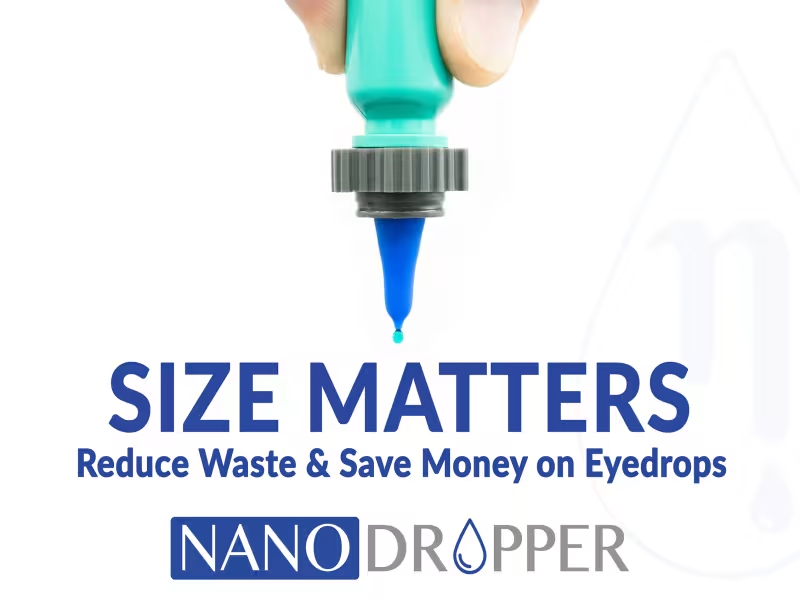
SHERIDAN, WYOMING – April 14, 2026 – Standard prescription eyedrop bottles have a built-in problem most patients never think about: each drop they dispense contains roughly five times more liquid than the human eye can actually hold. Up to 80% of every drop either overflows onto the cheek or drains through the tear duct into the bloodstream, meaning patients pay full price for medication that never reaches its target. A small FDA-listed device called the Nanodropper is designed to solve exactly this, attaching directly to a compatible bottle and cutting drop volume by more than 60% without replacing the bottle or altering the medication itself.
The Problem With Standard Eyedrops
The oversized drop problem is not news to researchers. Decades of clinical evidence have shown that smaller eyedrops can be just as effective as the current standard size — and in many cases safer, since less medication drains through the tear duct and is absorbed systemically into the body. Despite this, bottle manufacturers have never redesigned the standard tip, leaving patients to shoulder the financial and physical cost of the waste. For anyone managing a chronic eye condition like glaucoma, where a single prescription bottle can cost $275 or more, running out before the end of the month is a familiar and expensive frustration. Patients end up paying for medication that ends up on their cheek rather than doing its job in their eye.
How the Nanodropper Works
The Nanodropper is a small adaptor that twists directly onto the top of a compatible eyedrop bottle — no tools, no syringes, no change to the medication or treatment. The narrowed opening reduces each drop's volume by over 60%, delivering significantly more doses from the same bottle. Less liquid overflows onto the skin, and less drains through the tear duct into the rest of the body. The device comes in two sizes designed to fit most standard eyedrop bottles, and the company provides a compatibility checker on its website for patients who are unsure whether their bottle qualifies. It is currently the only FDA-listed device of its kind, distinguishing it from unverified alternatives.
Why It Matters
For patients on fixed incomes or managing multiple chronic eye conditions simultaneously, the cost of daily prescription drops can be a serious ongoing burden. Users of the Nanodropper report saving close to $300 per year, with bottles lasting five to six weeks longer than before — a meaningful extension for anyone taking three or more drop medications daily. Beyond the financial relief, reducing drop volume also lowers the amount of medication absorbed systemically through the tear duct, which may reduce the risk of side effects. Some users report noticeably less stinging after switching, particularly with higher-cost formulations. The device has also found an audience among pet owners: cats and small dogs being treated for glaucoma with standard drops frequently experience throat irritation from drainage, a problem the smaller drop size can help address.
What to Know Before You Try It
The Nanodropper is not compatible with every bottle on the market, so patients should check their specific bottle against the compatibility guide on the company's website before purchasing. Eye care professionals — optometrists and ophthalmologists — can advise on whether a reduced drop size is appropriate for a given treatment plan. One important restriction: the adaptor should not be used to extend multi-use bottles beyond their manufacturer-recommended duration of use, regardless of how much liquid remains. For compatibility questions or support, the company can be reached directly at support@nanodropper.com. The product is currently available in two sizes to cover the majority of standard prescription eyedrop bottles.
For patients managing the ongoing cost of daily prescription eyedrops, the Nanodropper offers a practical, FDA-listed route to getting more from every bottle.