Mainz – September 07, 2026 -- German broadcaster 3sat will air "Das Ich-Zeitalter: Zwischen Selbstverwirklichung und Selbstoptimierung," a documentary examining the booming self-optimization trend, on Wednesday, September 9, 2026, at 8:15 p.m. The film, directed by Isabella Purkart, will remain available in the 3sat Mediathek for 90 days after broadcast.
The documentary follows several people who have built their lives around the pursuit of a "better self," a movement heavily promoted by influencers on social media.
A 26-year-old plans to be cryogenically frozen after death
In Frankfurt am Main, filmmaker Lena Hager meets Vimal Kamaraj, 26, who has arranged to have his body frozen after he dies. He hopes future medical advances will one day revive him, and he already structures his daily routine around longevity practices.
An influencer warns that optimization once made friendship feel "unproductive"
Julia Barabasch, a 25-year-old influencer, describes reaching a point where she viewed spending time with friends as unproductive. She now speaks out against the pursuit of a "perfect self" widely pushed on social platforms. Stefan Röpke, a psychiatrist and psychotherapist at Oberbergklinik Berlin-Brandenburg, also appears in the film to explain when self-optimization becomes psychologically harmful.
A coach now spends winters living in a converted van in Spain
Jakob Horvat takes a different approach, running "men's circles" designed to help participants reconnect with their emotions. He says many of the people who come to him have achieved significant career success but suddenly find themselves asking what else in life still needs to be lived. After completing a trip around the world, Horvat restructured his own life and now spends winter months in Spain, living in a converted van.
A Amsterdam biohacker tracks his sleep, movement and diet daily
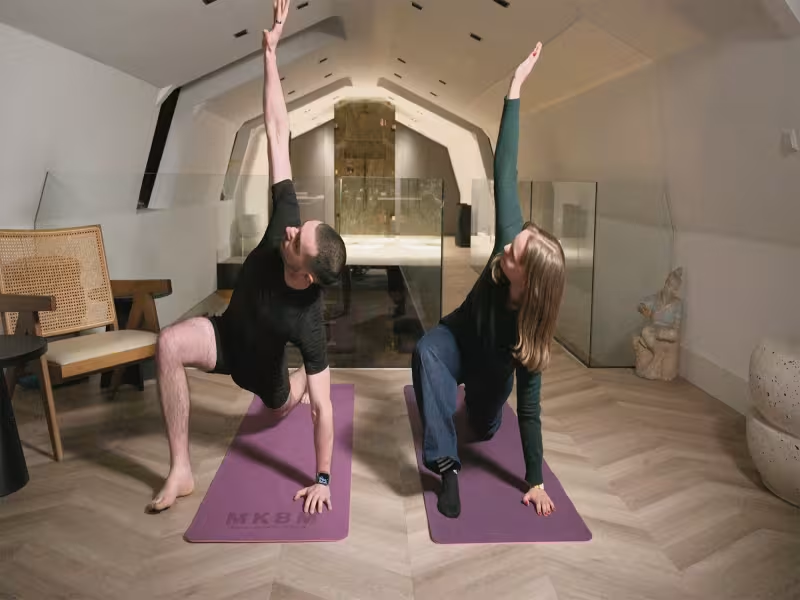
In Amsterdam, Purkart follows biohacker Jorn Kirkels, who organizes his entire day around peak performance. His routine starts with infrared light exposure, an ice-cold shower, kettlebell training, and breathing and stretching exercises. He continuously logs and analyzes his sleep, movement, and nutrition data.
The documentary also touches on the rising popularity of "microdosing" in the Netherlands, where proponents claim small doses of certain substances improve focus and creativity.