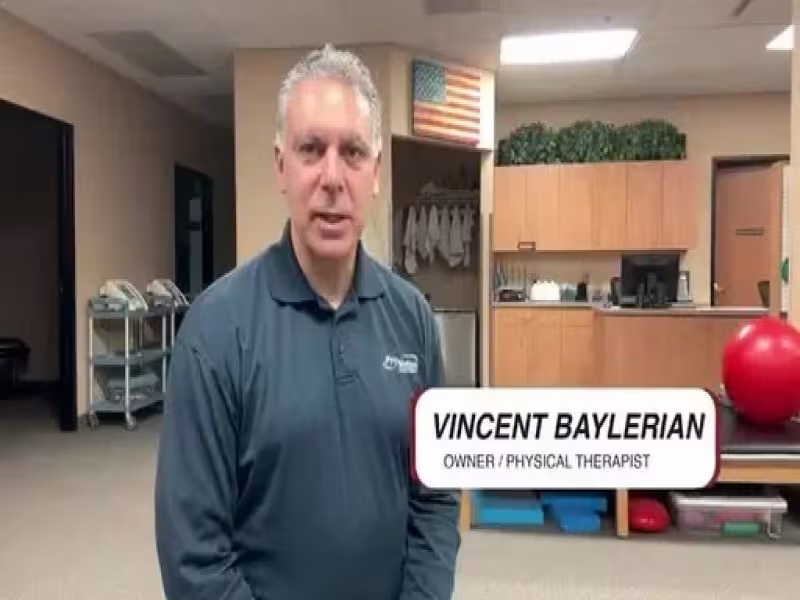
Brighton, Mich. – September 08, 2026 -- Morning stiffness and end-of-day aches in the shoulders, neck, knees, hips, or back are early warning signs that shouldn't be brushed aside, according to physical therapy expert Vince Baylerian of Brighton, Mich. His insights are featured in a new HelloNation article outlining simple home strategies to manage joint and muscle pain before it worsens.
Posture checks target shoulder and neck tension
The article points to long hours spent looking down at phones or sitting at desks as a major contributor to shoulder and neck discomfort among Brighton residents. Small posture adjustments during daily tasks, combined with basic movements like neck rotations and shoulder rolls, are recommended to help ease tension.
Gentle stretches address common back pain
For back pain, one of the most frequently reported complaints, the article suggests controlled movements such as knee-to-chest stretches and pelvic tilts to loosen tight muscles. Maintaining a neutral spine while sitting, standing, or completing everyday tasks is highlighted as key to reducing unnecessary strain.
Knee and hip pain often trace back to weak muscles
The piece links knee and hip pain to muscle weakness or limited flexibility, recommending equipment-free exercises like straight-leg raises and hip stretches suitable for beginners. Consistency, rather than intensity, is emphasized as the more important factor, with a short daily routine favored over waiting for pain to return.
Persistent pain signals it's time for professional evaluation
The article notes that physical therapy assesses how muscles, joints, and posture interact throughout the body, not just the area causing pain. Warning signs such as sharp pain, numbness, tingling, or discomfort that continues despite gentle home activity are cited as reasons to consult a physical therapist. Seeking evaluation earlier is linked to faster recovery and a lower chance of recurring pain.
The HelloNation article underscores that managing pain in the shoulders, neck, knees, hips, and back doesn't require complex routines or specialized equipment—just consistent daily habits and attention to the body's early signals.