Cologne – October 29, 2026 -- Interior insulation can raise the wall surface temperature in winter by around five degrees Celsius, cutting the risk of condensation and mold in older buildings without touching the facade.
Cold exterior walls encourage condensation and, with it, mold. Anyone who wants to prevent that and protect the building fabric should watch wall surface temperatures. Insulation can raise them, lower mold risk and reduce heat loss. The right choice between exterior and interior insulation depends on the building's structure, its facade and the effort involved.
Exterior insulation is the classic option, but often impractical in older buildings
Exterior insulation protects masonry from the weather and can reduce thermal bridges. In existing buildings, however, it is comparatively complex, usually requires scaffolding and may change the look of the facade. For listed, historic or architecturally distinctive buildings, it is often ruled out.
Interior insulation can be installed in single rooms or apartments
With interior insulation, the facade stays untouched, no exterior scaffolding is needed, and work can be limited to individual rooms or apartments. According to Thomas Molitor, deputy technical director of the ISOTEC Group, which has 85 specialist companies in Germany, Austria and Switzerland, the boards in the company's system are usually only a few centimeters thick. That costs little living space and allows window reveals and radiator niches to be included. Special insulating wedges help minimize thermal bridges at exterior wall corners and ceiling connections.
ISOTEC boards raise wall temperature and absorb moisture
ISOTEC says its interior insulation can lift wall surface temperatures by about five degrees Celsius at winter outdoor temperatures, and by more with unfavorable wall constructions and thicker insulation. The fully mineral boards are also capillary-active: they absorb room humidity and release it again when humidity drops, which helps prevent moisture damage and mold.
An ISOTEC calculation shows a 71 percent drop in heat loss
Warmer wall surfaces also make rooms more comfortable. In an ISOTEC calculation for a 1950-built house with 100 square meters of living space, transmission heat loss, the heat escaping through the building envelope, fell by 71 percent.
An uninsulated basement ceiling lets heat escape
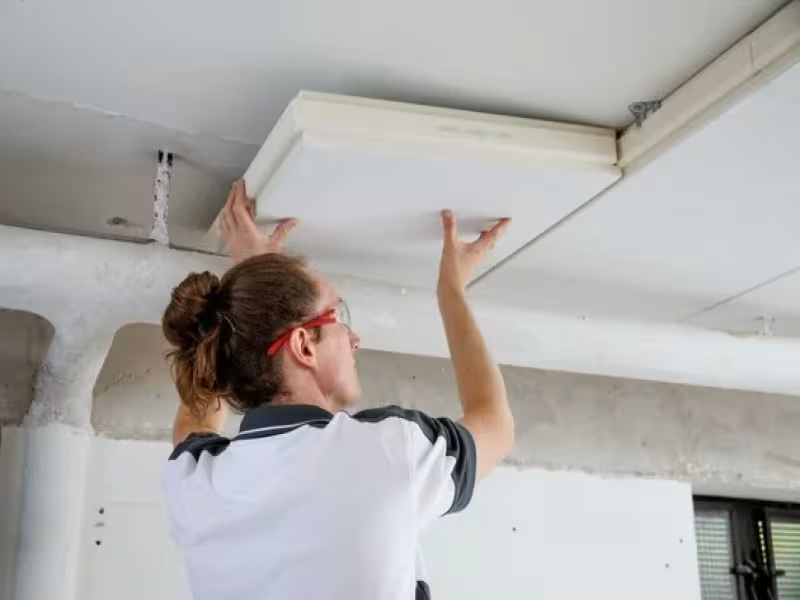
If the basement is unheated, an uninsulated ceiling can let heat from the ground floor escape and leave floors in the rooms above uncomfortably cool. ISOTEC's basement ceiling insulation uses a high-performance material that works even with a low build-up height. The boards are joined without thermal bridges and mechanically fastened, and a white fine plaster finish gives the ceiling a bright look.
There is no one-size-fits-all answer, Molitor says. Interior insulation offers clear advantages when the facade must be preserved, exterior insulation is out of the question, or only certain rooms or apartments are being insulated. At ISOTEC, it follows mold removal as a measure to address the cause and prevent mold from returning. With an unheated basement, basement ceiling insulation can sensibly complement it.