Franklin, Tenn. – September 08, 2026 -- Buying a plot of rural land is often just the first bill in a much longer list of expenses, according to a new HelloNation feature that breaks down what happens between closing and the first shovel of dirt for construction.
Grading and site prep costs vary wildly based on terrain
The article notes that steep slopes and heavily wooded parcels typically demand far more earthwork than buyers initially budget for, with the scope tied directly to topography, soil composition, and where the structure will sit.
Water and sewer aren't guaranteed on rural lots
When a property lacks access to public utilities, buyers must pay for a drilled well and a septic system instead. Well costs shift with local geology and water depth, while septic installation depends on soil percolation results and county health department rules.
Getting power to the site isn't free
Running electricity from the nearest utility pole can require trenching, transformer upgrades, and line extension fees -- all usually paid by the buyer. In especially remote spots, off-grid power is an option, but it comes with its own equipment and installation costs.
A simple driveway can quietly balloon the budget
Even a basic gravel driveway from a paved road to a building site can require significant material and labor, particularly over long distances or rough terrain. If the path crosses a drainage channel or wet area, culverts and extra grading are needed, and some counties require a driveway permit before work starts.
Soil tests can force expensive septic upgrades
Most counties mandate a percolation test before permitting a septic system, and a poor result can limit what type of system is allowed. Rural Land Experts note that an engineered septic alternative may be required in some cases, at a cost well above a standard installation.
Drainage, tree clearing, and permits add up before construction even begins
Low-lying ground, compacted soil, or nearby seasonal streams can force grading or drainage infrastructure even on land that looks dry. Clearing wooded lots brings added costs too, and buyers shouldn't assume timber sales will cover them without checking with a local contractor. Site plans, environmental assessments, soil studies, and permit applications carry their own fees that Rural Land Experts recommend building into the budget from day one.
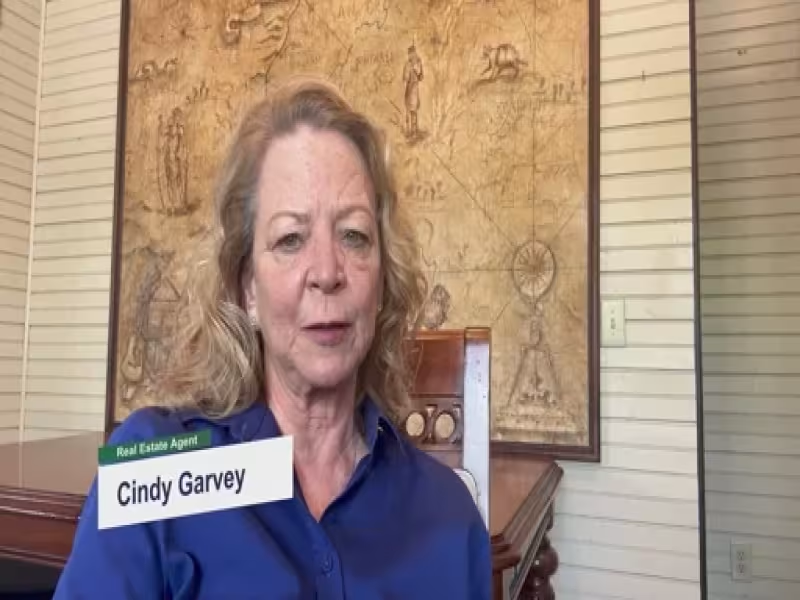
Combined, these preparation costs can match or exceed the price of the land itself on rural parcels needing substantial infrastructure work. The article, featuring insights from Cindy Garvey, a Rural Land Expert based in Franklin, Tennessee, urges buyers to research these expenses before closing to avoid budget-derailing surprises.