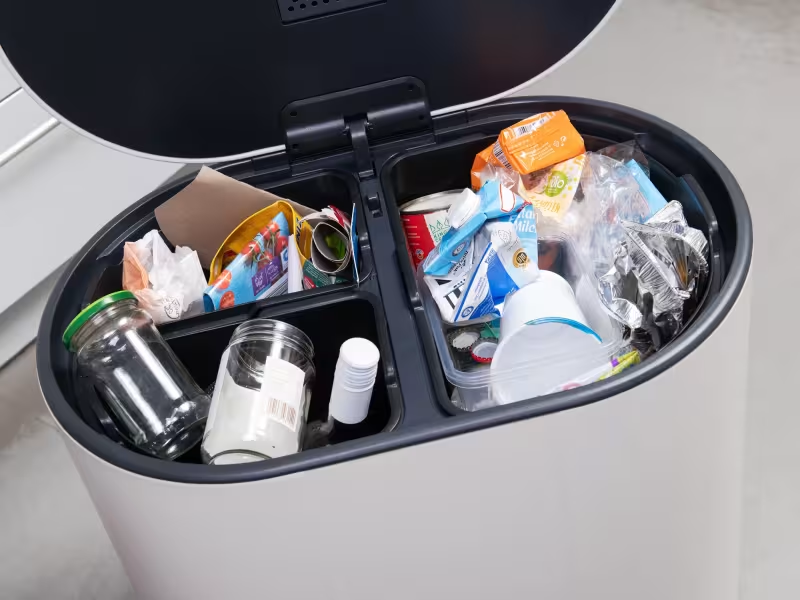
Cologne – September 04, 2026 -- Moving into a first apartment or shared flat this autumn means learning to separate household waste correctly, according to the German initiative "Mülltrennung wirkt." On average, 30 percent of what ends up in yellow bins and yellow bags across Germany doesn't belong there, the group says.
While landlords or property managers provide the necessary waste bins, tenants themselves are responsible for sorting correctly. "Improperly disposed waste can cause additional costs for all tenants. Even more important: correct waste separation is a prerequisite for functioning recycling loops," said Axel Subklew, spokesperson for the initiative. Packaging made of plastic, glass, or paper that ends up in general waste cannot be recycled.
Yellow bins take only empty, non-paper packaging
The core rule: yellow bins and yellow bags are for used, emptied packaging that isn't paper, cardboard, or glass. That includes plastic items like yogurt cups and shampoo bottles, aluminum and tin packaging such as cans or mustard tubes, and composite materials like beverage cartons.
Paper, glass, bio and general waste each need their own bin
Paper and cardboard go into paper bins. Glass bottles without deposit and disposable jars go into color-sorted glass containers. Organic waste like vegetable and fruit scraps belongs in bio bins, with local rules determining whether food scraps are allowed too. General waste bins are for items like tissues, disposable razors, used paper towels, and cigarette butts.
Four simple habits improve recycling rates
Packaging should be emptied of contents but doesn't need rinsing. Lids, seals, and plastic wrapping should be removed and disposed of separately so sorting facilities can identify different materials. Packaging shouldn't be stacked or nested, though beverage cartons can be flattened. Waste should be placed loosely or in transparent bags so collection workers can spot mis-sorted items.
E-cigarettes with lithium-ion batteries pose a fire risk
E-cigarettes contain lithium-ion batteries and must never go into household trash, yellow bins, or general waste, since damaged batteries can cause fires. Used e-vapes need to be dropped off at electronic waste collection points, such as recycling centers or retail stores -- the same rule applies to devices like hair dryers and toasters.
Correct sorting cuts 1.95 million tonnes of CO2 annually
A study by the Öko-Institut found that recycling packaging from yellow bins, glass, and paper collections saves 1.95 million tonnes of CO2-equivalent emissions annually in Germany. Packaging recycling also generates roughly four million tonnes of secondary raw materials each year, providing a key resource for manufacturing new products.