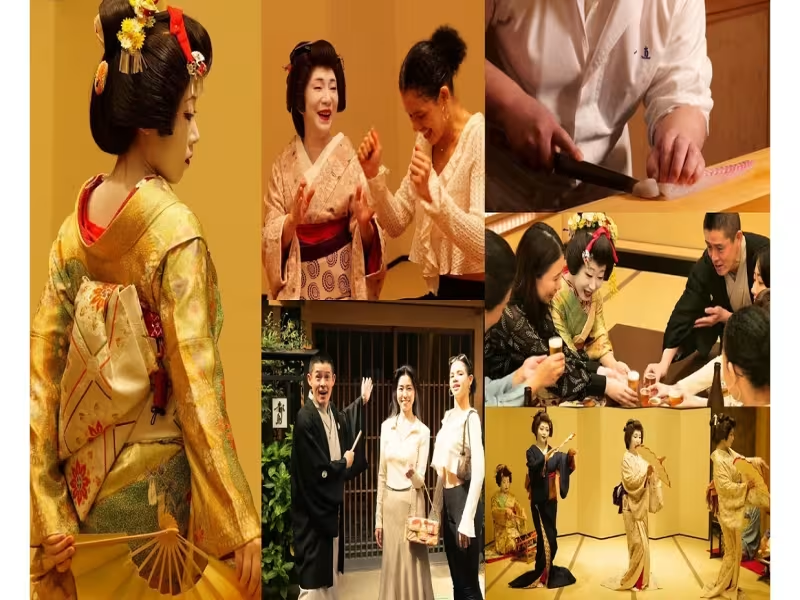
Tokyo – October 30, 2026 -- A pilot tour in Tokyo's Asakusa district will take visitors through a traditional craft workshop, a neighborhood walk and an introduction to ozashiki, the intimate setting where geisha and hōkan entertain guests. Organizer ROJICOYA has not yet opened bookings, and details on availability, duration and participation requirements will appear on its official website.
The tour is built around three experiences
ROJICOYA organizes cultural experiences, walking tours and events centered on Edo culture and traditional performing arts, primarily in Tokyo. For this pilot, the guides are the people who sustain Asakusa's traditions: a rakugo storyteller or a hōkan leads the walk, and geisha and hōkan perform at close range.
Visitors tuck silk into paulownia wood at Hakocho
The workshop takes place at Hakocho, a paulownia wood specialist founded in 1874 on Orange Street, a two-minute walk from Kaminarimon Gate. Participants practice kiri kimekomi: pure silk kimono fabric is tucked into grooves carved in the wood to form decorative patterns. They choose fabrics for a pre-carved piece and create auspicious motifs such as bells, gourds and folding fans. The finished work is theirs to keep.
ROJICOYA also works with local businesses specializing in Edo kiriko cut glass and tenugui cloths.
A rakugo storyteller or hōkan guides the walk through Asakusa's entertainment past
The route covers Sensō-ji, Rokku and Kannon-ura. Stops include Chingodō, nicknamed "Otanuki-sama," where people pray for protection from fire and improvement in the performing arts. Another is the Hōkan-zuka monument, which commemorates the history of hōkan entertainers.
The history behind the walk is specific. In the mid-19th century, policies of the Tokugawa shogunate moved Edo's three leading kabuki theaters to Asakusa. From the Meiji era onward, cinemas and variety theaters clustered around Rokku.
Ozashiki brings geisha and hōkan to the same room
The tour ends with an introduction to ozashiki, led by a hōkan. Also known as taikomochi, hōkan are male entertainers who combine witty conversation, dance and comic performance. They read the mood of a gathering and help first-time guests feel at ease. Participants then meet geisha and watch their performances alongside hōkan entertainment.
Asakusa's geisha community, the karyūkai, includes dancers known as tachikata, jikata who provide shamisen music and singing, and young apprentices called hangyoku. The Asakusa Kenban in Kannon-ura, north of Sensō-ji, anchors the network that coordinates geisha engagements at traditional restaurants and supports their training.
Geisha also appear outdoors. They join the Grand Procession on the opening Friday of the Sanja Matsuri, Asakusa Shrine's annual festival held each May, performing tekomai and group dances.