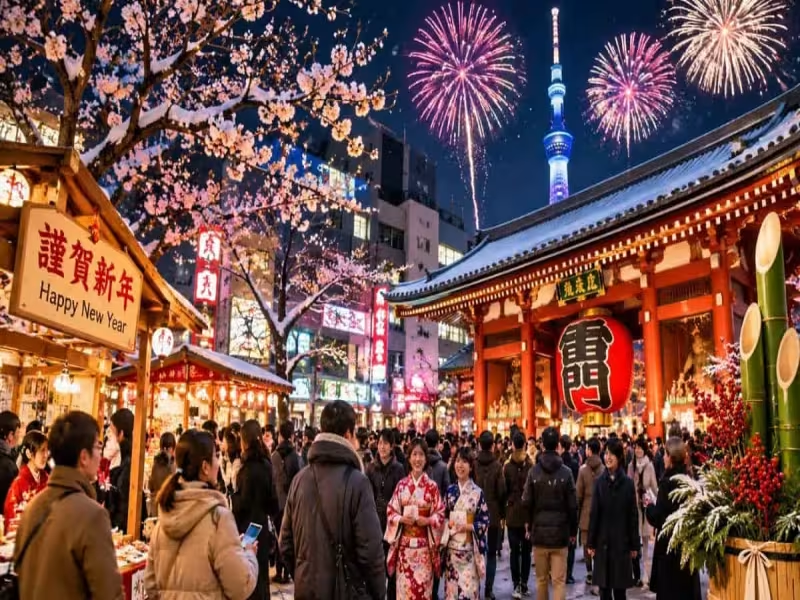
TOKYO -- November 21, 2026 -- Visit Japan over the New Year and many restaurants, independent shops, banks and museums will be closed, especially on 1 January. That is the trade-off of Shōgatsu, the holiday whose main rituals fall between 31 December and 3 January, when JTB Corporation forecasts about 38.7 million domestic travellers will be on the move.
Closures peak on 1 January, so meals and trains need a plan
Many small business owners shut for several days around the holiday, particularly on 1 January, to be with family. Public transport and expressways also get congested as people travel to their home towns.
The travel advisers cited in the source material recommend relying on hotel dining rooms or convenience stores on peak closure days. They also recommend reserving Shinkansen seats well in advance, or arranging private transfers.
Tokyo empties out as 38.7 million people travel
JTB forecasts that total domestic travel spending will rise 4.3% to 1,710 billion yen. By our calculation, that works out to roughly 44,200 yen per traveller (1,710 billion yen divided by 38.7 million).
Residents leaving the capital means quieter roads. The source describes Shinjuku and Shibuya as far less crowded than usual, although major shrines and historic quarters stay busy.
Four traditions run on fixed dates
- 31 December, midnight: Joya no Kane, when Buddhist temple bells ring 108 times.
- 31 December: toshikoshi soba, long buckwheat noodles eaten to mark the move into the new year.
- 1 to 3 January: Hatsumode, the first shrine or temple visit of the year, at sites such as Meiji Shrine in Tokyo and Fushimi Inari Shrine in Kyoto.
- First three days of January: osechi ryōri, dishes packed in tiered lacquer boxes, served with ozoni mochi soup.
Narita schedules 3,382 international flights a week this winter
That is about 483 a day (3,382 divided by 7). The source says it is the highest weekly frequency since the airport opened.
The Japan Tourism Agency reports that foreign visitors spent 2.2 trillion yen in the third quarter, up 3.2% year on year. The material does not say which year the quarterly and booking figures cover.
The national tourism organisation says South Korea remains Japan's top inbound market, with more than 26.9% of arrivals. Bookings from travellers based in the United States are up 24% year on year.