SHERIDAN, WYOMING – April 11, 2026 – Renault Group's three consumer brands — Renault, Dacia, and Alpine — will operate under a unified growth framework through 2030, reshaping how the French automaker competes on pricing, technology, and international markets as the automotive industry faces accelerating disruption.
A new strategic plan built for durability
Presented on March 10, 2026, at Renault Group's Technocentre in Guyancourt, France, the futuREady plan replaces the previous Renaulution strategy and sets a single overriding ambition: making Renault Group the European automotive reference with global reach. CEO François Provost framed the shift plainly — the group has demonstrated it can win market battles; the next test is whether it can sustain performance across multiple cycles of volatility.
Provost described the broader industry context as entering a tougher, faster, and more unpredictable cycle, driven by electrification timelines, geopolitical supply chain pressures, and intensifying competition from Asian manufacturers. The futuREady plan is structured around four pillars — growth-ready, tech-ready, excellence-ready, and trust-ready — each assigned to a senior leader on the group's Leadership Team.
Four pillars and the executives behind them
The growth-ready pillar focuses on product differentiation and customer experience. Fabrice Cambolive, CEO of the Renault brand and newly appointed Chief Growth Officer, oversees both the Renault and Dacia brands and leads international expansion with a primary focus on India, Latin America, and South Korea. Katrin Adt, who joined as Dacia CEO in September 2025, and Philippe Krief, CEO of Alpine since July 2023, each presented their brand's strategic direction under this pillar.
The tech-ready pillar is owned by Chief Technology Officer Philippe Brunet, whose background spans Formula One engine development and EV engineering with Ampere. His mandate is to accelerate innovation across powertrains and electrification to keep the group ahead of competitors. The excellence-ready pillar, led by Thierry Charvet as Chief Industry, Quality and Supply Chain Officer, concentrates on operational resilience — designing manufacturing and logistics systems that can absorb disruption rather than react to it. The trust-ready dimension was addressed by Provost directly, covering how the group intends to build long-term value with shareholders, partners, and regulators.
International expansion and the Bridger Concept
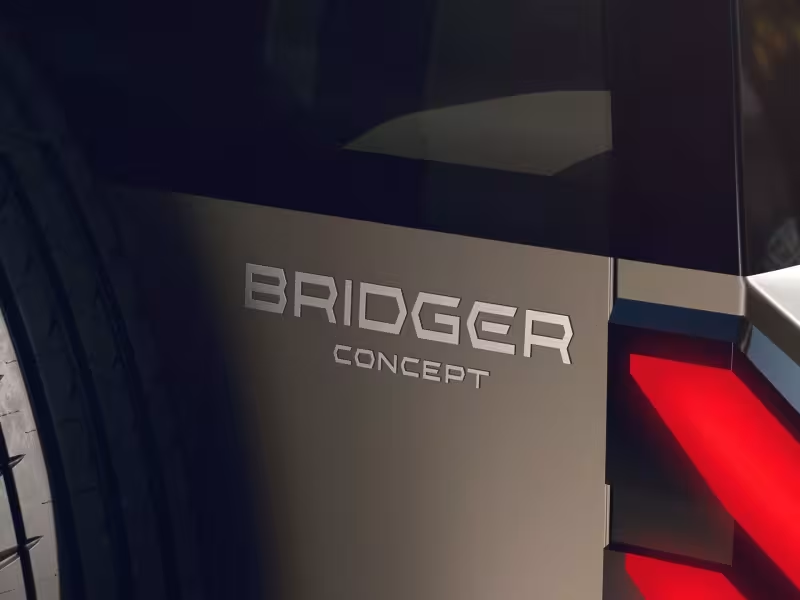
Alongside the futuREady framework, Renault Group revealed the name of its latest show-car: the Bridger Concept, positioned as a signal of the group's stepped-up international offensive. While full specifications were not detailed at the Strategy Day event, the naming of the concept underlines the group's intent to communicate product ambition beyond its traditional European strongholds.
Cambolive's international development remit — specifically targeting India, Latin America, and South Korea — reflects a structural shift in where the group expects future volume growth to originate. These are markets where Dacia's value-oriented positioning and Renault's established local presence could translate into meaningful share gains if the excellence-ready operational model delivers the cost discipline the plan requires.
Why it matters
For consumers in emerging markets such as India, Latin America, and South Korea, the futuREady plan has direct consequences for vehicle availability and pricing. Cambolive's expanded international brief means Renault and Dacia products are being actively engineered and positioned for these regions rather than adapted as afterthoughts, which could broaden access to competitively priced electric and combustion vehicles in markets currently underserved by European brands.
For automotive industry professionals and supply chain operators, the excellence-ready pillar signals a shift toward designed-in resilience rather than reactive crisis management — a direct response to the supply disruptions that cost the industry billions during the semiconductor shortage years. Charvet's combined oversight of industry, quality, and supply chain from September 2025 onward means decisions across those three functions are now coordinated at the leadership level, reducing the structural gaps that allowed previous vulnerabilities to cascade. Investors and analysts tracking European automakers will also be measuring futuREady's concrete targets as they emerge, since the plan explicitly sets 2030 as its horizon and frames European automotive leadership as a measurable outcome rather than an aspiration.