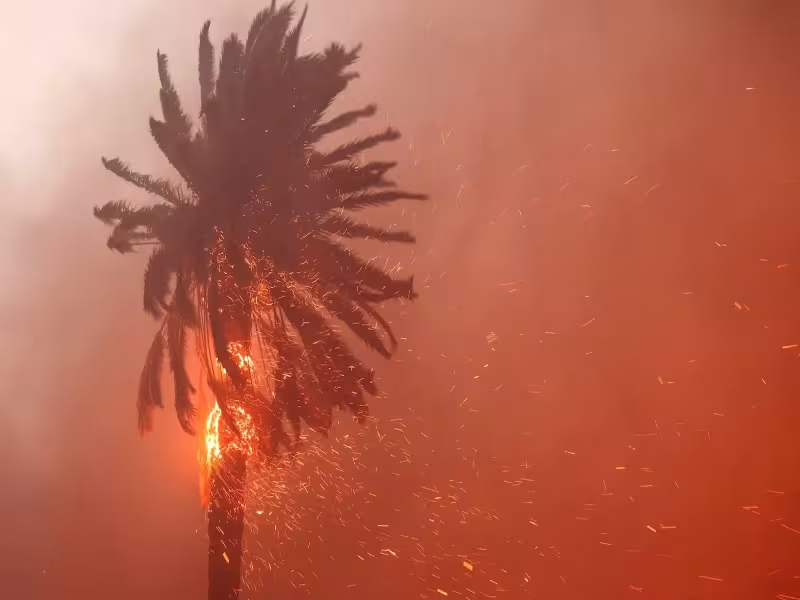
Los Angeles – November 09, 2026 -- The Palisades and Eaton fires, both ignited on Jan. 7, have damaged or destroyed more than 12,000 structures in Los Angeles County. By Jan. 14, the two blazes had killed 25 people, and the Palisades Fire was 17% contained while the Eaton Fire was 35% contained.
Two fires started within eight hours
A multi-day red flag warning took effect Jan. 7 for parts of Los Angeles and Ventura counties, with severe drought and strong Santa Ana winds in the forecast. At 10:20 a.m., an AlertCalifornia camera spotted smoke in the Pacific Palisades. Mandatory evacuation orders followed by noon, and Gov. Gavin Newsom declared a state of emergency when the fire reached 1,200 acres. At 6:18 p.m., Cal Fire reported the Eaton Fire in Altadena, and by 7:30 p.m. high winds had grounded firefighting aircraft.
A 100 mph gust was recorded near the Eaton Fire early on Jan. 8. By Jan. 10, the Palisades Fire had reached nearly 20,000 acres and the Eaton Fire nearly 14,000.
Smaller fires stretched crews further
Firefighters also fought several smaller blazes, including the Hurst Fire in Sylmar, the Woodley Fire in the Sepulveda Basin, and the Sunset Fire in the Hollywood Hills. The Lidia, Kenneth, Archer and Auto fires also broke out. Most of these were contained within days; the Hurst Fire reached 97% containment after burning nearly 800 acres.
Evacuees faced curfews, water warnings and a false alert
Pasadena issued a do-not-drink notice after damage to water reservoirs, tanks and pumping stations. On Jan. 10, officials imposed a 6 p.m. to 6 a.m. curfew in evacuated areas to prevent looting. Newsom later doubled the National Guard deployment to 1,680 service members.
On Jan. 9, an evacuation alert was mistakenly sent to millions of county residents. The county called it a "serious breach of public trust," and the state's Office of Emergency Services took over public alerts for now.
Federal aid covers 100% of response costs for 180 days
President Joe Biden approved a major disaster declaration for California on Jan. 8. The federal government will cover the full cost of the disaster response for 180 days, up from the typical 75% to 90%. The California Community Foundation Wildfire Recovery Fund had collected more than $6 million from over 13,000 donors by Jan. 12.
Investigators and courts are examining causes and water supply
The Bureau of Alcohol, Tobacco, Firearms and Explosives is leading a task force on the fires' cause and origin, including whether they are connected. Fire agencies are examining whether Southern California Edison equipment caused fires in the Eaton and Hurst areas. Edison International CEO Pedro Pizarro said the company cannot yet rule out a role for its infrastructure because it has not examined the equipment.
Four lawsuits filed Jan. 13 by Eaton Fire homeowners and renters allege Southern California Edison failed to de-energize all its equipment despite red flag warnings. Palisades residents and businesses separately sued the Los Angeles Department of Water and Power. Newsom had called for an independent investigation into lost hydrant pressure and the Santa Ynez Reservoir, which had reportedly been closed for repairs when the Palisades Fire started.
The Los Angeles County medical examiner counted 24 deaths on Jan. 12, eight in the Palisades Fire and 16 in the Eaton Fire. One more Eaton Fire death was reported Jan. 14. Another red flag warning runs through Jan. 15, and power shutoffs in evacuated areas will continue until it ends.