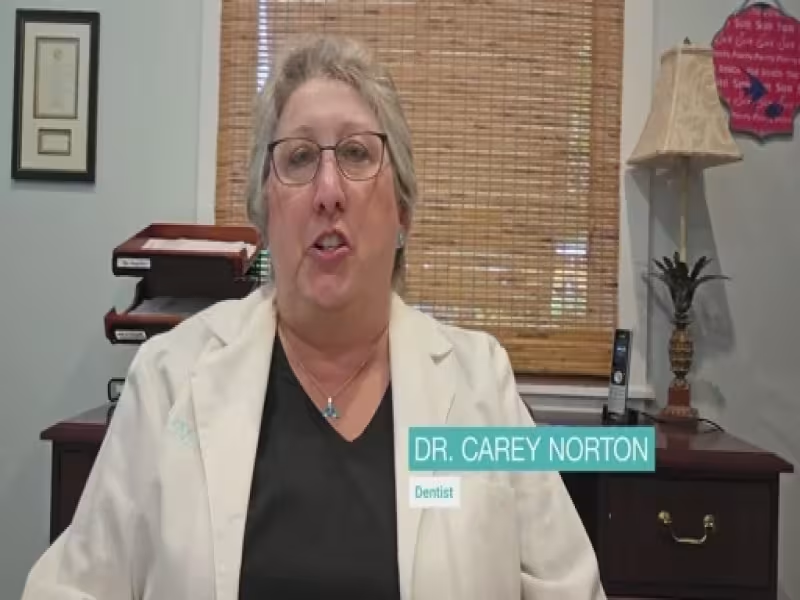
Dacula, Ga. – October 30, 2026 -- A root canal can remove infected tissue and keep your natural tooth, but only if enough healthy structure remains to support a lasting restoration, according to a HelloNation article featuring Dr. Carey Norton of Dacula Family Dentistry.
Removing infection is only half the decision
After a root canal, a tooth commonly needs a filling or dental crown. Enough solid tooth structure must remain above and below the gumline to hold that restoration in place.
Decay depth and cracks change the outcome
Deep decay may reach the pulp while leaving enough enamel and dentin for a crown. Decay that extends far below the gumline makes a secure restoration more difficult.
Some cracked teeth can be treated with a root canal and crown when the damage is limited. A vertical root fracture is a different problem: bacteria may keep entering the tissues around the root, which makes extraction more likely.
Gum and bone health affect long-term stability
Periodontal disease can cause bone loss and loosen a tooth. Even if a root canal clears the infection, inadequate periodontal support can make long-term stability difficult.
X-rays reveal what symptoms cannot
Dentists use X-rays to look for infection around the root, bone loss, deep decay, earlier dental work, and certain fractures. Three-dimensional dental imaging may sometimes add detail about root structure and surrounding bone.
Pain is not a reliable guide. Severe pain, swelling, or sensitivity can occur in an infected tooth that is still treatable, while a tooth with little pain may have extensive structural damage that limits restoration options.
Earlier treatment can limit what remains
A tooth with a large filling, crown, or earlier root canal may have less natural structure left. Root canal retreatment can sometimes address persistent infection, but the tooth must still be strong enough to support another restoration.
Extraction becomes more likely in specific cases
The article lists three triggers: decay or fractures that leave too little usable structure, a severely damaged root, or substantial loss of supporting bone. Dentists may also consider extraction after unsuccessful prior treatment when further care is unlikely to give a predictable result.
The takeaway for patients is that clearing an infection does not automatically mean a tooth can be saved.