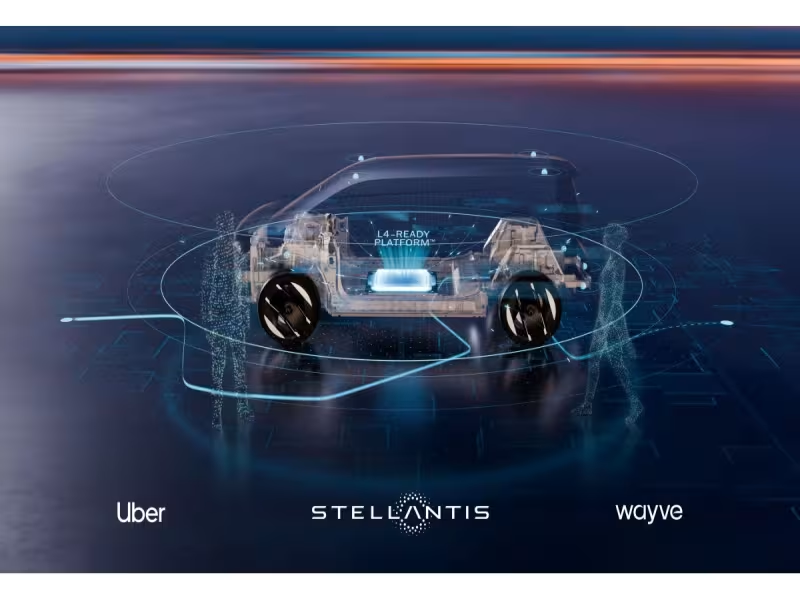
SHERIDAN, WYOMING – July 3, 2026 – Stellantis, Wayve and Uber have announced a new partnership aimed at bringing fully driverless Level 4 robotaxis to riders around the world. The three companies confirmed the collaboration on June 17, with simultaneous announcements from Amsterdam, London and San Francisco underlining just how global this ambition is. For everyday riders, the news matters because it links a familiar name in the driveway, a rising force in AI driving software, and the ride-hailing app already on millions of phones. Rather than one company trying to solve autonomy alone, this deal signals that carmakers, AI developers and mobility platforms are converging on a shared playbook to get robotaxis out of pilot programs and into daily life.
Three Companies, One Robotaxi Stack
Each partner is bringing something distinct to the table. Stellantis will design and manufacture the vehicles themselves, built on what it calls L4-Ready Platforms, engineered from the outset with the sensor suites and redundancy needed for high-mileage driverless use. Wayve supplies the AI driving software, an end-to-end system built to adapt to new regions and road conditions without needing city-by-city mapping first. Uber, meanwhile, plugs the finished vehicles into its existing rider network, meaning autonomous trips could eventually be booked through the same app people already use to call a regular ride.
Why This Matters for Riders
For consumers, the appeal is convenience wrapped in familiarity. Nobody has to download a new app or learn an unfamiliar brand to try a robotaxi under this arrangement; the vehicles are meant to show up inside the Uber marketplace people already trust. The partnership also builds on ground the three companies have already covered together. Stellantis and Wayve recently struck a separate L2++ driver-assistance agreement, while Wayve and Uber are already working to deploy autonomous rides across London, Tokyo and ten other cities this year.
What the Executives Are Saying
Ned Curic, Stellantis' Chief Engineering and Technology Officer, framed the deal as a step toward smoother everyday mobility.
"This collaboration brings us closer to delivering a smarter, safer and more efficient mobility for our customers," said Curic.
Wayve's VP of Commercial and Operations, Kaity Fischer, pointed to the deal as validation of the company's broader strategy.
"This is just another strong signal that the industry is converging around Wayve's technology as the way to scale AVs globally," said Fischer.
Uber's Sarfraz Maredia, Global Head of Autonomous Mobility and Delivery, emphasized the combination of strengths involved.
"Successfully scaling autonomous mobility means bringing together the right vehicles, technology, and platform in a seamless way," said Maredia.
From Framework to the Road
It's worth being clear about what stage this is at. The companies have signed a non-binding Memorandum of Understanding, which sets up a framework for future agreements on technology development, licensing, production and vehicle procurement rather than locking in a finished rollout plan. Each partner keeps the freedom to pursue other autonomous driving collaborations alongside this one, so nothing here is exclusive. The stated goal is to bring robotaxi services to cities across Europe, North America and beyond, though specific launch cities and dates have not yet been set under this particular agreement.
Mini FAQ
Q: What is a Level 4 robotaxi? A: Level 4 refers to a vehicle capable of driving itself within defined conditions without a human driver needing to take over, though it may still be limited to certain areas or circumstances.
Q: Will I be able to book one of these robotaxis through the Uber app? A: That's the intent behind the partnership, though the agreement is a preliminary framework rather than a confirmed launch, so timing and city availability haven't been announced yet.
Q: Does this replace Wayve and Uber's existing robotaxi plans? A: No. It builds on their current work to deploy autonomous rides in London, Tokyo and other cities, adding Stellantis as the vehicle manufacturer for future deployments.
Q: Is this deal exclusive to the three companies? A: No. Each company retains the flexibility to pursue other partnerships in the autonomous driving space.