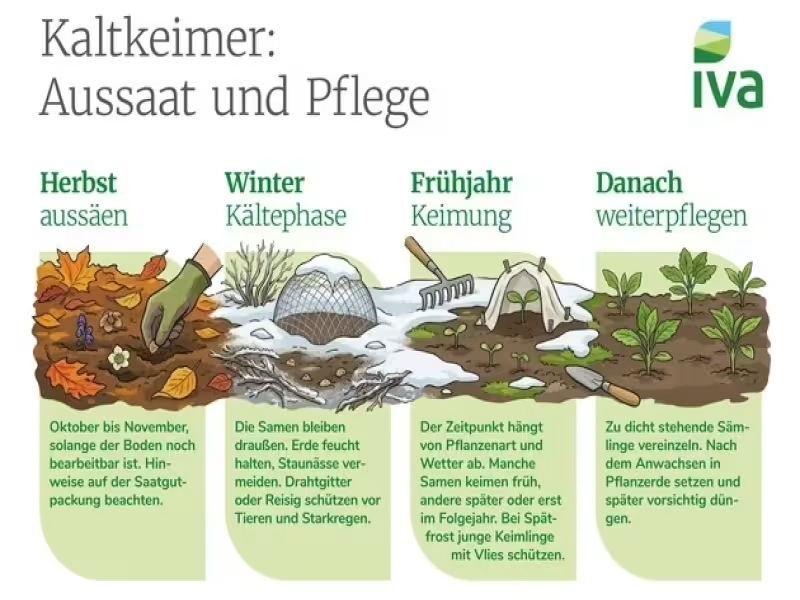
Frankfurt – October 28, 2026 -- Gardeners who want new perennials next year can start sowing in the coming weeks. Many perennial species are cold germinators: their seeds carry a built-in germination block that only several weeks of cold can lift. Sown in fall, the seeds spend winter in the soil and sprout from spring, depending on the species, according to Germany's Industrieverband Agrar (IVA).
Cold germinators fit sunny, shady and small spaces
The group includes perennials in a range of heights, flower colors and bloom times. Depending on the species, they pair with roses, grasses, bulbs or annual summer flowers. They suit sunny, partly shaded and shady spots, as well as small plots and planters. Combined with plants that bloom at other times, a bed stays attractive for many months.
October and November are the usual sowing window
Seeds can go into prepared beds, trays or pots. Loosen the bed soil and clear the weeds first. For containers, the IVA recommends loose, low-nutrient seed-starting soil. Sow while the soil is still workable, usually between October and November. Sowing too early risks seeds germinating in fall, leaving young plants exposed to frost. Seed packets list timing, depth and location for each species.
Light matters for some species. Light germinators are barely covered or just pressed into the soil. Dark germinators must be fully covered, usually with a soil layer two to three times as thick as the seed.
Direct sowing or a nursery bed
With direct sowing, seeds go where the perennial will eventually bloom, so check that the spot meets its light, soil and space needs. Alternatively, use a small nursery bed reserved for raising seedlings, where young plants are easier to tend and protect. The IVA suggests a weatherproof label with plant name and sowing date to find the spot again in spring.
Containers belong outdoors in a sheltered place, where seeds get the natural cold but stay out of heavy rain. They should never stand permanently in water. Water gently after sowing and check the soil regularly over winter. It should not dry out completely or stay constantly wet, since waterlogging can damage seeds and encourage rot.
Wire mesh keeps birds and mice away
Fine-mesh wire or a few twigs protect seeds from birds and mice and stop heavy rain from washing them away. If late frosts are forecast once seedlings appear in spring, cover them with fleece and remove it when frost risk ends.
Some seeds take until the following spring
Germination timing depends on the species and on temperature swings, frost and warm spells. A mild winter can bring earlier germination, while some species may wait until the following spring or longer. The IVA advises against giving up on trays or marked spots too soon.
Container-grown seedlings go into normal, loose potting soil once strong enough. Crowded seedlings are separated and potted individually, a step called pricking out. After they establish, a weak liquid fertilizer dosed per the manufacturer's directions can help, but fertilizing too early or too strongly should be avoided. Strong young plants then move to their final spot, thinned beforehand so each has enough room.