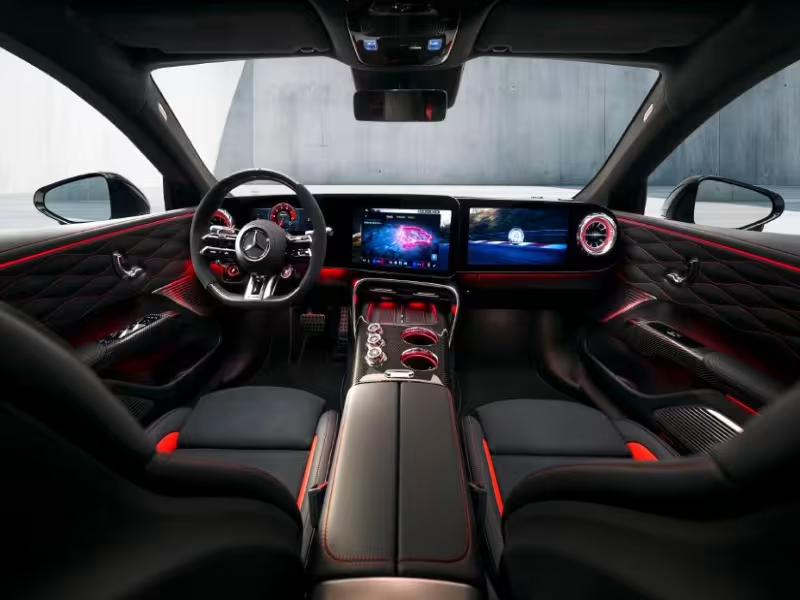
SHERIDAN, WYOMING – March 6, 2026 – Mercedes-AMG has revealed the interior of the upcoming new Mercedes-AMG GT 4-Door Coupe, and the message is clear: this cabin is meant to feel like a cockpit, not a lounge with a steering wheel. Announced from Affalterbach on March 6, 2026, the interior centers on driver-focused screens, tactile controls, and a new AMG RACE ENGINEER control concept that’s designed to make response, agility, and traction adjustments feel immediate. This matters because modern performance cars can feel overly digital or overly complicated—AMG is trying to make high performance feel more direct, more intuitive, and more emotional for people who actually like to drive.
What Mercedes-AMG Is Really Selling Here
AMG says it wants performance to be “much more than measurable data” and instead an all-encompassing experience. In plain terms, that’s a promise about feeling: the interior should make you feel connected and in control before you even move an inch. The cabin is described as an in-house development from Affalterbach, designed to create the most direct possible interaction between human and machine.
There’s a clear lifestyle angle here, too. A lot of fast cars today chase minimalism so hard that you lose the “special” feeling, while others drown you in menus. AMG is going in a different direction: keep the digital power, but anchor it with physical control points and a cockpit layout that constantly nudges your attention toward driving.
The Quote That Explains the Whole Strategy
“In the new Mercedes-AMG GT 4-Door Coupe, we have consistently focused every interior detail on performance and implemented it with the highest precision. Even when stationary, the interior already showcases what the future GT 4-Door is capable of, making the vehicle’s driving dynamics immediately tangible. It creates maximum control and enables a typical AMG driving experience that gets the pulse racing.”
Michael Schiebe, Member of the Board of Management of Mercedes-Benz Group AG, Production, Quality and Supply Chain Management, and Chairman of the Board of Management of Mercedes-AMG GmbH
AMG RACE ENGINEER: Knobs That Make the Car Feel “Alive”
The headline interior feature is AMG RACE ENGINEER, which AMG describes as an intelligent integration of high-end hardware and software. The key point is that you don’t just get a drive mode button and call it a day. AMG highlights three driving dynamics controls on the center console that allow instant adjustment of throttle response, traction, and handling characteristics.
These three rotary controls are described as the AMG RACE ENGINEER Control Unit, providing direct access to what AMG calls the vehicle’s “central nervous system.” They are oriented toward the driver and designed to give tactile feedback, with a design echoing the outer climate control vents. The practical takeaway: AMG wants you to tune the car’s character quickly and physically, not hunt through screens while trying to focus on the road.
Response, Agility, Traction: What the Three Controls Do
AMG spells out the roles of the three center-console controls, and the language is very “driver-first.” Each control targets a different part of how the vehicle reacts when you push harder.
- The “Response Control” dial coordinates the response of the electric motors to accelerator pedal commands.
- The “Agility Control” rotary control changes the agility around the vertical axis and thus the cornering behavior.
- The “Traction Control” rotary control – used to control slip – influences the intervention of the traction control in nine stages.
Even without driving the car, you can see what AMG is aiming for: a performance personality you can shape in seconds, from calm and secure to sharper and more playful, depending on your skill level and conditions.
A Digital Cockpit That’s Designed Around the Driver
AMG describes the cockpit as a command center for performance enthusiasts. The dashboard is dominated by a wide display concept split into a driver-oriented area and a slightly offset passenger area. The primary displays include a 10.2-inch digital instrument cluster and a 14-inch multimedia display that form a seamless single unit, with the multimedia display ergonomically angled toward the driver.
An optional 14-inch passenger display with separate content is also mentioned. The intent is obvious: keep the driver’s world focused and readable, while still giving the passenger something to do in a very modern, screen-native way.
AMG also emphasizes a balanced operating concept that mixes tactile, haptic, touchscreen, and voice controls. That matters because performance driving is about timing and attention. A cabin that forces you into touchscreen-only interactions can feel slick in a showroom but annoying in real life. AMG appears to be trying to avoid that trap.
Seats and Space: Sports-Car DNA, Grand Tourer Comfort
AMG frames this as “sports car DNA combined with the attributes of a grand tourer,” and the interior details match that positioning. Up front, the seating position is described as sporty and low, intended to immediately create a focused driving experience. The newly developed front seats offer high lateral support, and optional AMG Performance seats add integrated headrests and design details aimed at emphasizing sportiness and lightweight construction.
In the rear, AMG highlights standard individual seats for two passengers with generous legroom and comfort aimed at long-distance use. An optional three-passenger rear seat is also available. This is a big deal for the “4-door coupe” buyer: you’re not just buying speed, you’re buying a fast car you can actually live with—friends, trips, and long drives included.
The Roof and Lighting: Performance Mood, Not Just Decoration
The standard one-piece panoramic glass roof is described as contributing to a spacious feeling and can switch between transparent and opaque depending on equipment. With available SKY CONTROL, it can be divided into individually switchable segments for more control over sunlight.
At night, AMG describes an available lighting display that turns the roof into a “sparkling canvas,” with illuminated AMG emblems above the driver and front passenger and motorsport-inspired racing stripes across the roof surface. This is the emotional layer: it’s not necessary for speed, but it’s absolutely part of why people buy AMG—drama, theater, and atmosphere.
MBUX and MB.OS: The Software Layer Behind the “Feel”
AMG says the user interfaces and Mercedes-Benz User Experience (MBUX) are intuitive to use and based on the new Mercedes-Benz Operating System (MB.OS). It describes a software-to-cloud architecture that networks and controls control units and functions, plus newly developed display styles.
Two named display styles stand out: “AMG Special” with four sub-screens, and “AMG TRACK PACE,” which can show telemetry data, acceleration values, or race data depending on situation. The important consumer takeaway is that AMG wants the screens to feel purposeful, not decorative—information and control aligned with performance use.
3 Ways This Matters If You Care About Driving Feel
- If you hate digging through menus, the physical AMG RACE ENGINEER controls are aimed at making key performance adjustments fast and intuitive.
- If you want “digital” without losing character, the cabin mixes big displays with tactile feedback and a driver-oriented layout.
- If you want performance without sacrificing usability, the rear-seat comfort focus suggests AMG is still treating this as a real long-distance GT, not a compromised toy.