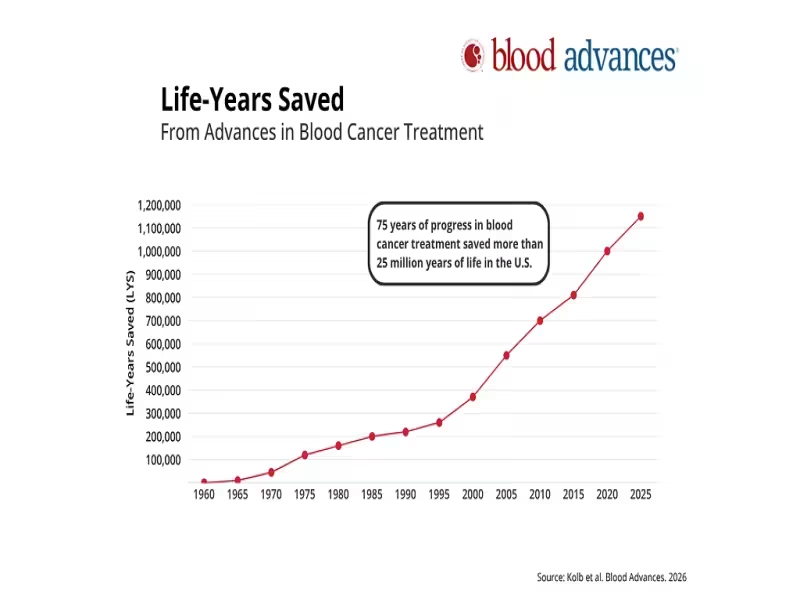
Washington – September 07, 2026 -- A new analysis published in Blood Advances finds that treatment advances for leukemia, lymphoma, myeloma and other blood cancers have saved an estimated 25.8 million life-years in the United States since 1949. The study, led by Blood Cancer United, introduces a first-of-its-kind "life-years saved" methodology built on data from the National Cancer Institute's SEER Program, tracking cancer incidence, mortality and U.S. life expectancy from the era of the first chemotherapies through 2024.
Blood cancers now account for nearly 10% of all U.S. cancer diagnoses, with more than 192,000 new cases expected this year. Unlike many solid tumors, where screening and prevention drive survival gains, progress against blood cancers depends almost entirely on new therapies and access to them.
Researchers project 18.9 million more life-years by 2040 -- but warn the gain isn't guaranteed
On the current trajectory, blood cancer therapies are expected to add another 18.9 million life-years between 2026 and 2040. Researchers caution that policy changes limiting insurance coverage or restricting access to effective treatments could slow that progress. Faster innovation and broader access to care, by contrast, could add 1 million additional life-years (a range of 0.8 to 1.5 million) beyond current projections -- the target behind Blood Cancer United's "Bold Goal."
Hodgkin lymphoma and acute lymphoblastic leukemia account for more than half of all life-years saved
Hodgkin lymphoma represents about 32% of total life-years saved and acute lymphoblastic leukemia about 25%, reflecting decades-old treatment breakthroughs. Non-Hodgkin lymphoma contributes another 21%, tied to immunotherapies such as rituximab, approved in 1997. Acute myeloid leukemia shows the smallest gains, particularly among older adults, pointing to a need for new first-in-class drugs.
Black patients see worse survival outcomes across most blood cancer types
The analysis found Black patients experience significantly worse survival than White patients for most blood cancers, with multiple myeloma a notable exception, where outcomes are equitable or better for Black patients when treatment access is comparable.
"Life-years saved... provides a more meaningful way to monitor progress over time and assess how changes in healthcare policy, research funding and access to treatment may impact patients' lives," said Dr. E. Anders Kolb, president and CEO of Blood Cancer United. Co-author Dr. Ann-Kathrin Eisfeld of The Ohio State University Comprehensive Cancer Center said the data reveal "stark gaps, particularly for Black patients and those with acute myeloid leukemia," underscoring the need for continued research investment and more equitable treatment access.
Blood Cancer United plans to publish an annual report tracking progress against its Bold Goal of adding more than 1 million life-years for blood cancer patients by 2040.