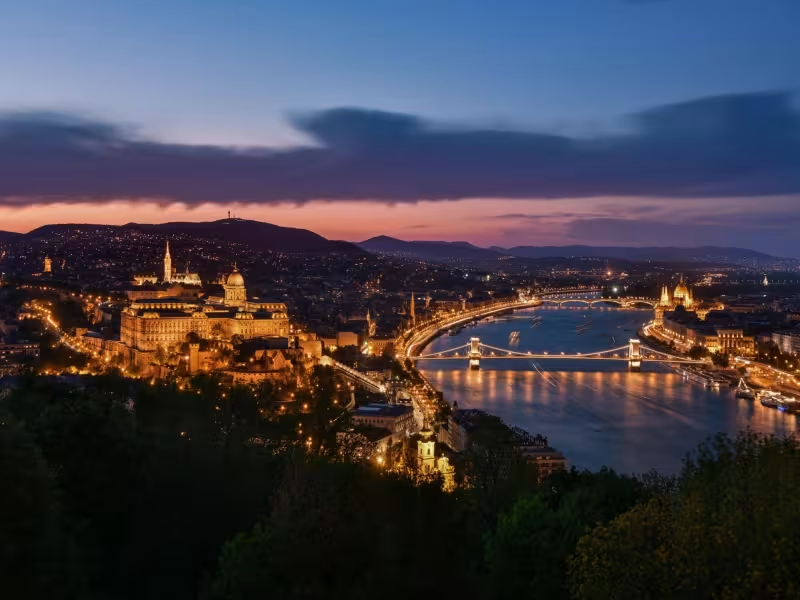
SHERIDAN, WYOMING -- June 15, 2026 -- While most summer travelers chase beaches and open-air markets, Hungary is quietly offering something far more refreshing — a world of underground caves that stay cool, ancient, and utterly unlike anything you'd find above ground. With more than 4,000 registered caves, Hungary holds one of the most diverse cave landscapes in all of Europe, ranging from underground boat rides and glittering stalactite formations to thermal cave systems tucked beneath a capital city. For anyone looking to escape the summer heat without booking a flight to a distant coast, Hungary's subterranean world is a seriously underrated option.
Abaligeter Cave: Stalactite Wonder in the Mecsek Hills
Near the southern city of Pécs, nestled in the picturesque Mecsek mountains, the Abaligeter Cave ranks among the most well-known stalactite caves in southern Hungary. A small stream winds through the 466-meter main passage, gradually sculpting new formations year after year. Temperatures inside hold steady at around 12 degrees Celsius, and the air quality is notably pure — both reasons locals have long used the cave as a summer retreat. In winter, the cave serves a different purpose: a vital habitat for horseshoe bats.
Baradla Cave: UNESCO Heritage Beneath the Surface
The Baradla Cave, located in the UNESCO-protected Aggtelek Karst, is one of Hungary's most celebrated underground sites. Its main passage stretches roughly 25 kilometers and took shape over 200 million years, preserving enormous stalactites, stalagmites, and fossils of prehistoric sea creatures along the way. An extensive underground water system continues to reshape the cave even now. Beyond standard guided tours, the cave regularly hosts concerts and guided meditation sessions, making use of its extraordinary acoustics and atmosphere in ways that go well beyond geology.
Tapolca Lake Cave: Boat Rides Through Turquoise Water
Hidden beneath the streets and buildings of the town of Tapolca lies one of the most unusual cave experiences anywhere in Europe. Visitors board small boats and drift through illuminated passages where the water shimmers in shades of turquoise. Year-round temperatures hover around 18 degrees Celsius, offering a natural coolness that makes the cave especially appealing in summer. A modern visitor center rounds out the experience with interactive exhibits on karst landscapes and how cave systems form.
Budapest's Hidden Cave World
Few European capitals can claim an underground cave system as varied and extensive as Budapest's. Beneath the city's historic hills runs a network of thermal and karst caves that blends natural spectacle with centuries of human history.
The Pál-völgyi Cave is the longest cave system in Hungary. Narrow corridors open into grand chambers lined with glittering calcite crystals, and the constant temperatures make it one of the country's most striking natural monuments.
For families, the Szemlő-hegyi Cave is the more accessible option — it can be navigated with a stroller or wheelchair. Its unusual mineral formations, which resemble cauliflower or popcorn, have earned it the informal title of Budapest's underground flower garden.
History enthusiasts tend to gravitate toward the Buda Castle Cave, a roughly 3.3-kilometer system that connects natural limestone caves with medieval cellars, World War II air raid shelters, and historic prison facilities. It's equal parts geology and living archive.
Then there's the Molnár János Cave, an active thermal cave system located just meters from the Danube. It's best known among cave divers for its crystal-clear water and ongoing geological processes that make it as much a research site as an adventure destination.
Mini FAQ
Q: Do you need special equipment to visit Hungary's caves? A: Most caves offer standard guided tours requiring no special gear. The Molnár János Cave is an exception — it's primarily visited by experienced cave divers.
Q: What's the best time of year to visit? A: Caves stay cool and accessible year-round, but summer is especially popular given the contrast with outside temperatures.
Q: Are the caves suitable for children? A: Several are, including the Szemlő-hegyi Cave in Budapest, which is accessible with strollers and wheelchairs.
Q: Is the Baradla Cave really UNESCO-protected? A: Yes — it sits within the Aggtelek Karst, a UNESCO World Heritage Site shared between Hungary and Slovakia.
For a full overview of Hungary's caves and planning resources, visit Visit Hungary.