New York – October 07, 2026 -- Domestic holiday airfares have jumped sharply this year, with Thanksgiving round-trip fares up 15% and Christmas fares up 16% compared to last year, according to new data from flight deals app Going. International fares, by contrast, have stayed essentially flat for both holidays.
Going flight expert Willis Orlando attributes the increase to rising fuel and labor costs, strong summer travel demand that outpaced available seats, and the exit of a major low-cost carrier from the market. His advice to travelers: book early and know the right days to fly.
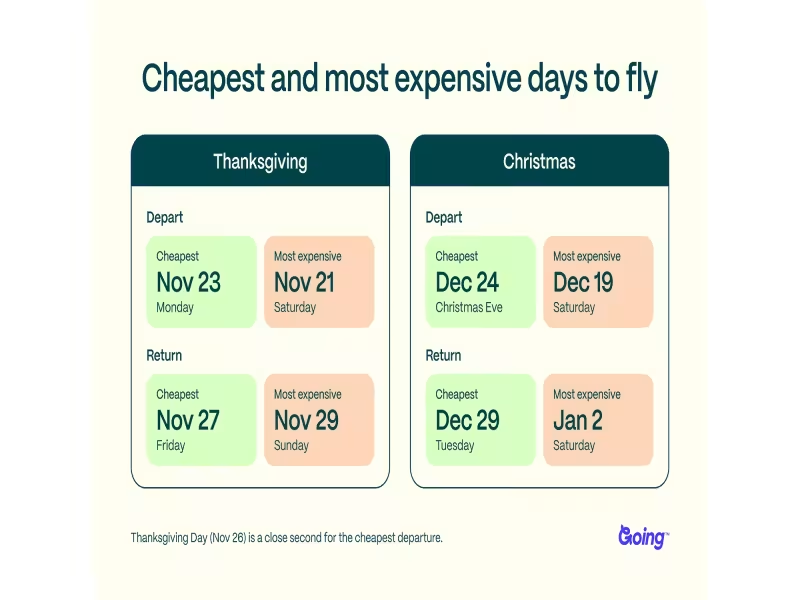
Monday before Thanksgiving and Christmas Eve offer the cheapest departures
Going's data shows Monday, Nov. 23, and Christmas Eve are the cheapest days to depart for Thanksgiving and Christmas travel, respectively. The weekends immediately before and after each holiday remain the most expensive days to fly, whether departing or returning.
The Midwest and Northeast are seeing the steepest fare hikes
Regional pricing varies widely. The Midwest faces the largest Thanksgiving increase at 28% year over year, nearly double the national domestic average. The Northeast leads Christmas fare hikes at 34%. The West region has the mildest increases in both periods, up 11% for Thanksgiving and 14% for Christmas.
International fares quietly drop during Thanksgiving week
While most travelers focus on domestic trips, international fares tend to fall during Thanksgiving week, making it one of the cheapest windows all year to fly overseas. Recent Going deals for that week include round-trip fares to Casablanca for $649 from New York City, Seoul for $664 from San Francisco, London for $617 from Los Angeles, Berlin for $595 from Chicago, and Auckland for $763 from Los Angeles.
Morning flights have a far better on-time record
According to Department of Transportation data from September 2026, morning flights have an on-time departure rate more than 40 percentage points higher than evening flights. Going also recommends using points, since award pricing hasn't climbed as fast as cash fares this year, and setting fare alerts to track price drops after booking.
Travelers also have federal protections: under Department of Transportation rules, passengers who decline to fly after a U.S. flight delay of three hours or more—or six hours or more for international flights—are entitled to a full cash refund to their original payment method.