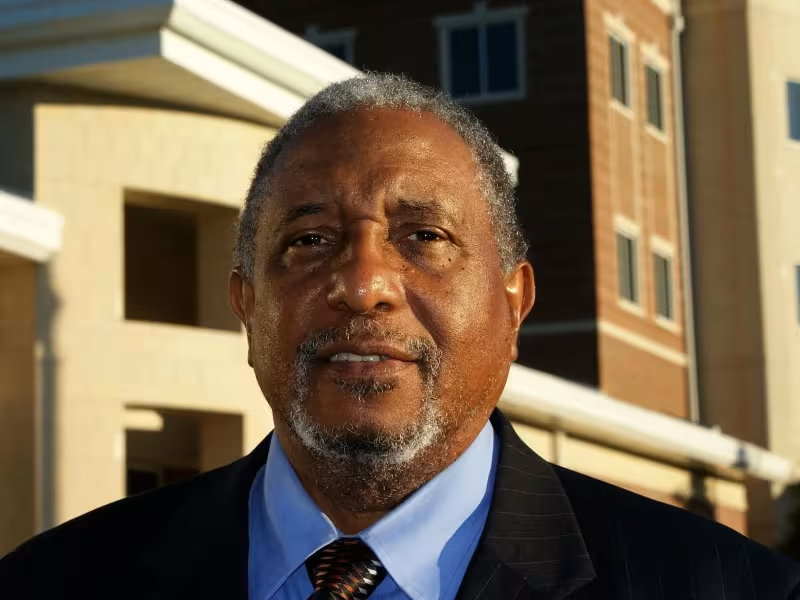
SHERIDAN, WYOMING -- August 18, 2026 -- The National Civil Rights Museum is mourning Rev. Dr. Bernard Lafayette, Jr., the organizer and nonviolence teacher who helped steer sit-ins, Freedom Rides, and the Selma campaign. Staff remember him as a 2012 Freedom Award honoree and a frequent visitor who walked students through the Lorraine Motel in Memphis. His death closes a living link to the people who planned the modern Civil Rights Movement from the ground up. For families still talking about voting rights at the kitchen table, his story shows how ordinary neighbors, trained and organized, changed national law. He spent a lifetime arguing that courage needed training, and that democracy grows when regular people learn how to stand up together.
From Nashville Lunch Counters To Selma
Young Lafayette did not wait for a podium. As a student in Nashville, he helped lead the 1960 sit-ins that confronted segregated lunch counters one stool at a time. He later helped form the Student Nonviolent Coordinating Committee, giving young activists a home of their own. Those early choices set the pattern for everything that followed.
Buses came next. He took part in the 1961 Freedom Rides, then poured energy into Alabama voter registration campaigns. In 1965 he worked in the Selma movement, where organized, disciplined protest helped draw national support for voting rights legislation. People who knew the work called him a strategist, not because he chased cameras, but because he planned.
Nonviolence, for him, was training. He wanted neighbors to know how to stay calm, stay together, and stay on message when the lights were harsh. That habit made him one of the movement's most trusted teachers. It also left a trail that later students could still walk.
A Teacher Who Kept Showing Up
Titles faded. The work did not. He served as National Program Administrator for the Southern Christian Leadership Conference and later accepted appointment as National Coordinator of the 1968 Poor People's Campaign. That assignment continued the economic justice effort Dr. King had opened in his final years. Lafayette treated it as unfinished business, not a memorial.
He wore several hats at once—minister, educator, lecturer. Classrooms and pulpits heard the same core lesson: nonviolence is a philosophy and a method you can practice on a Tuesday night. At Emory University and in other teaching posts, he kept sending that message to people who had not been born when the first sit-ins began.
Museum voices later praised him for pairing bravery with organization and a clear moral line. Anniversaries of the Selma to Montgomery marches still put his kind of grassroots training in the spotlight. Democracy, in his telling, grows when everyday people get tools, practice, and the nerve to insist on a fair count.
Lessons At The Lorraine Motel
Awards were only part of the bond. After the museum gave him the Freedom Award in 2012, he kept returning as a teacher. As a professor he regularly brought students to Memphis so they could stand at the Lorraine Motel, the site of Dr. King's assassination. He trusted rooms and balconies to teach what slides cannot.
Bringing living students to a death site turns history into something a visitor can feel in the soles of their shoes, which matters because civic rights stay abstract until a person stands where the cost of those rights became visible. He joined distinguished guests in 2018 for MLK50, marking fifty years since the assassination in Memphis. Museum leaders said, "We are honored that Rev. Lafayette shared his wisdom with our visitors, our students, and our institution."
Staff extended condolences to his family, colleagues, students, and all whose lives he shaped. They said his example of persistence and benevolent altruism still instructs the people who walk through their doors.
Mini Faq On A Life Of Organizing
Who was Rev. Dr. Bernard Lafayette, Jr.? He was a civil rights strategist and minister who helped lead the Nashville sit-ins, supported the founding of the Student Nonviolent Coordinating Committee, rode in the Freedom Rides, and worked Selma and Alabama voter drives.
What tied him to the National Civil Rights Museum? The museum honored him with the 2012 Freedom Award, welcomed his student groups at the Lorraine Motel, and hosted him again during the 2018 MLK50 commemoration.
Why does his work still touch daily life? His campaigns helped build support for voting rights legislation, and he spent decades teaching people how organized nonviolence can change a neighborhood and a nation.
What did he want younger people to learn? He believed in place-based learning and in handing movement lessons to the next generation so they could practice democratic participation themselves.