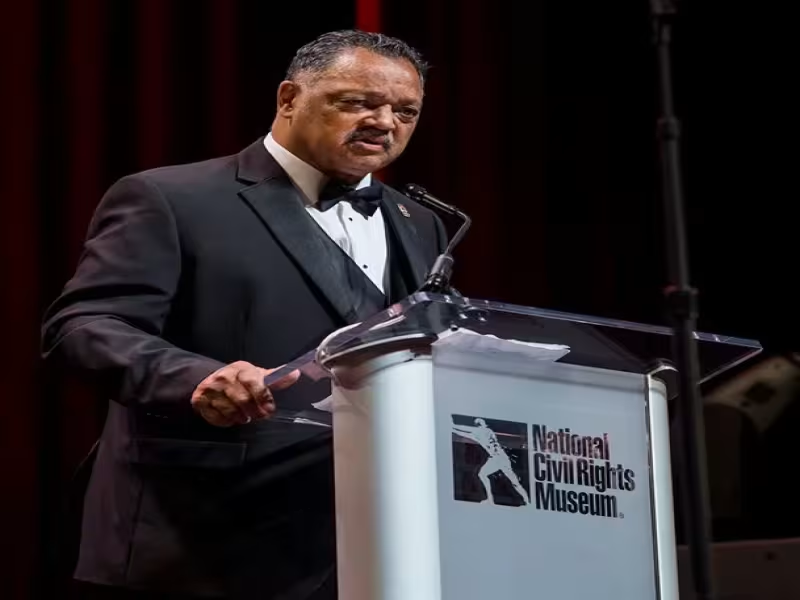
SHERIDAN, WYOMING -- August 18, 2026 -- The National Civil Rights Museum is mourning Reverend Jesse L. Jackson, Sr., the civil rights leader who stood with Dr. Martin Luther King, Jr. in the 1960s and later built groups that fought for jobs and votes. He began as a young leader in the Southern Christian Leadership Conference and as director of Operation Breadbasket, then founded Operation PUSH and the Rainbow Coalition. Those years were about breaking down racist systems and growing economic power in Black communities. The museum’s farewell matters to ordinary households because Jackson treated housing, health care, school access, and the right to cast a ballot as kitchen-table fights, not distant history.
A Young Organizer In A Hard Decade
Friends of the movement remember a preacher who learned his craft while the country argued in the streets. Jackson worked beside King when churches, boycotts, and long walks set the pace of change. Operation Breadbasket put him at the junction of faith and payday, pushing firms to hire Black workers and to spend money with Black businesses.
He soon needed a larger shop. Operation PUSH and the Rainbow Coalition gave him that room, and the museum calls their method a lasting model for political and economic lift. Later organizers borrowed the mix of rallies, boycotts, and voter work. Even people who never held a sign felt it when a registration drive shifted who got heard in politics or a picket line made a business listen.
Jackson kept labor, classrooms, clinics, and rent on the same agenda as marches. He argued with presidents and still tried to hand a microphone to neighborhoods that rarely got one. That double move—pressure at the top, loyalty at the margins—explains why so many households heard his name at church, on the evening news, and wherever workers gathered.
April Days Beside The Lorraine Motel
His life is braided into the museum’s own April calendar. He came back again and again for remembrances of King’s assassination at the Lorraine Motel. The museum says he did not float in as a famous guest. Staff remember a man who had watched history break open and who still claimed King’s incomplete assignment as his daily job.
Visitors at those gatherings could see a living organizer still talking about unfinished work. The site stopped feeling like a sealed exhibit. It felt like a meeting that had never adjourned.
Those solemn hours also carried a warning the museum still repeats. Freedom had a cost, and the work did not end in 1968. Jackson’s voice at the motel kept that clock running for anyone who might have wanted the story to freeze behind glass.
When a museum treats a leader as a regular witness instead of a one-night headliner, everyday visitors learn that conscience is a practice of returning, not a single holiday speech.
A 2018 Honor And A Map That Crossed Oceans
The museum handed Jackson its Freedom Award in 2018. Staff framed the prize as thanks for decades of gathering people, confronting cruelty, and asking the public to hold onto hope. He received it as another charge, they say, not as a farewell bouquet.
His campaigns did not stop at the U.S. shoreline. He stood with opponents of apartheid in South Africa and carried the same insistence into American halls of power. He marched with workers, bargained for hostages to go free, and built voter drives that changed who showed up on Election Day.
He also named a goal he called "One Big Tent America." Race, class, and faith were supposed to fit under that canvas around a shared task. That picture still reads like a practical wish for mixed families and tense workplaces.
Grief, Thanks, And Work Left On The Table
Officials sent their deepest sympathy to the Jackson family and to the Rainbow PUSH Coalition. They also pledged to take up his mission again in his honor. They measure the inheritance less by speeches than by habits: he arrived, he spoke plainly, and he pulled other people up while he climbed.
A global brief for peace and equality can sound abstract until you pin it to rent, a classroom, a picket, or a clinic waiting room. Jackson kept pinning it. Those same fights still decide whether a family can stay in a neighborhood or get a fair shift.
Mini FAQ For Families Following This Story
Who released this remembrance?
The National Civil Rights Museum, which often welcomed Jackson during April 4 programs at the Lorraine Motel.
What groups did he lead or found?
He directed Operation Breadbasket, served as a young leader in the Southern Christian Leadership Conference, and later founded Operation PUSH and the Rainbow Coalition.
What did the 2018 Freedom Award recognize?
The museum cited a lifetime spent mobilizing communities, challenging injustice, and urging people to hold onto hope.
How does the museum say it will respond?
It offered condolences and said it would take up his mission again through its own work.