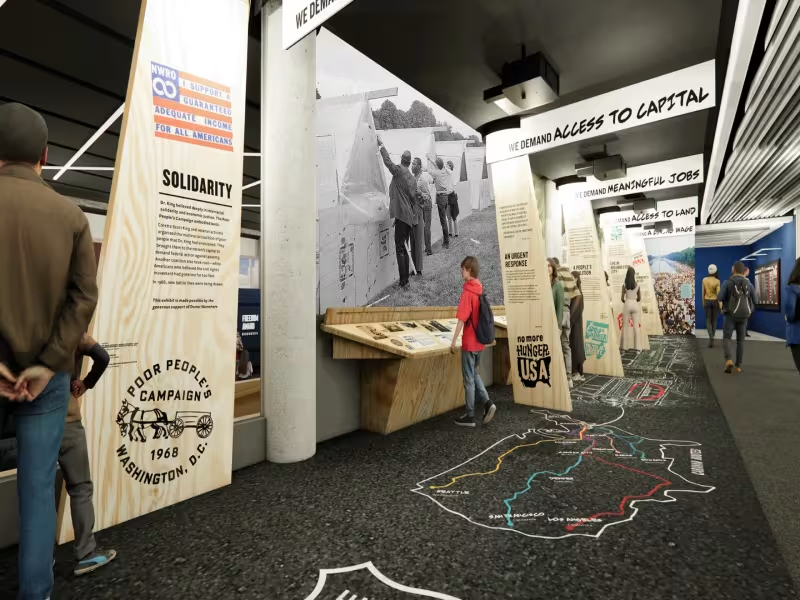
SHERIDAN, WYOMING -- August 18, 2026 -- Guests stepping into the National Civil Rights Museum’s Legacy Building this summer find more than fresh walls and new screens. The space reopened in late spring and now walks people through the work Dr. Martin Luther King Jr. left unfinished. Five galleries take on poverty, education, housing, gender, and nonviolence, the same pressures he named in his 1967 book Where Do We Go from Here: Chaos or Community? Families, students, and casual travelers can see how those issues still shape paychecks, classrooms, and neighborhoods. That connection turns a historic site into something people can use when they go back home.
Museum president Dr. Russ Wigginton framed the relaunch as an invitation into unfinished work, not a backward-looking shrine. The structure once faced the Lorraine Motel from the other side. Staff recast that wing as a place where the struggle continues in public view.
King’s Last Book Sets the Path
King’s 1967 volume asked whether the country would choose community or chaos. Curators built the new galleries around that question. Visitors move through rooms that treat poverty as policy, not fate. Education, housing, gender, and nonviolence sit beside it as living fights rather than closed chapters.
Many guests first meet King through a holiday clip. These rooms put them with the writer who spent his last year on wages, housing, and schools. The five themes give families a shared vocabulary for the rest of the visit.
What rose after 1968 now fills as much space as the earlier story. Exhibits follow the Poor People’s Campaign in its first wave and in later revivals. Guests can compare tactics across decades without needing a textbook.
What Happened After 1968 Fills the Rooms
One gallery stays with the assassination investigations. Newly uncovered documents sit near long-running conspiracy claims. The display keeps asking who faced accountability and who did not. That material can feel heavy. It also refuses to treat the murder as a settled footnote.
A timeline gallery tracks activism from the 1970s to now. Names and turning points from each decade share the wall. Nearby, the Freedom Award exhibit honors people whose work on today’s fights still ties back to older civil and human rights campaigns.
Multimedia stories bring in organizers who still knock on doors and push policy. Guests hear how local groups turn a meeting into a rule change. Those clips keep the rooms from feeling like a trophy case.
Kiosks and touchscreens ask visitors what they value and what they have lived. People can weigh in on strategies they see in their own towns. The prompts treat guests as participants, not only as an audience.
Screens That Ask You to Talk Back
New classroom and gallery rooms can flip quickly. A court ruling, a protest wave, an election, or a fresh milestone can land in those spaces without waiting for a multi-year redesign. Staff built those rooms so the Legacy wing can keep pace with the news people already argue about at dinner.
When a museum can swap in a new case after a ruling lands, everyday visitors stop treating civil rights as something that ended in a photograph. They leave knowing the next headline might already have a corner waiting for it.
Digital stations point toward petitions, organizing networks, local service, and policy campaigns. The path does not end at a gift shop slogan. It closes by asking what a guest will do next and treats hope as a practice rather than a mood.
Cross-generational voices fill the last stretch. Leaders talk about people making change right now. Young artists built installations that tie teenage language to older lessons. Families can stand in the same room and hear both registers.
Wigginton described a platform that keeps moving, not a collection locked in 1968. Guests who care about justice as daily work, not only as memory, now start in this wing.
Questions Visitors Keep Asking
What themes do the new galleries cover?
Poverty, education, housing, gender, and nonviolence sit at the center, drawn from King’s late writing.
Does the exhibit stop in 1968?
No. It follows campaigns, awards, and organizers from the 1970s through the present, including the Poor People’s Campaign in both eras.
Can younger guests take part?
Youth-designed pieces and interactive kiosks give children and teens a way to speak, not only to listen.
Is this only a look backward?
Flexible rooms and action prompts keep the visit tied to court fights, elections, and local service happening now.