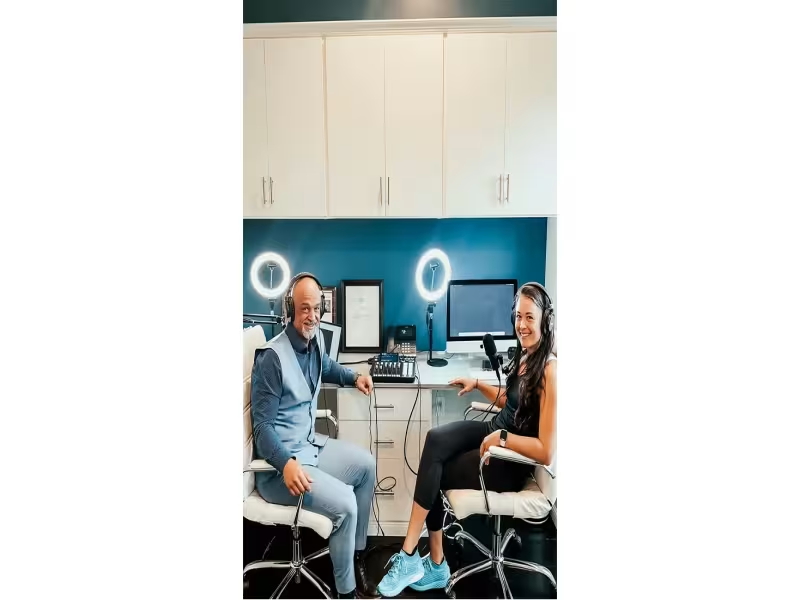
Fredericksburg, Va. – September 17, 2026 -- Retirement planning usually centers on savings and investments, but a lesser-discussed factor -- muscle mass -- can significantly shape how those retirement years actually play out, according to the co-founders of the Fitness & Finance Radio podcast.
"We spend decades building a financial portfolio for retirement, but we should be building our physical portfolio at the same time," said Jennifer Scherer, co-founder of Fitness & Finance Radio and founder of Fredericksburg Fitness Studio. She notes that muscle protects the ability to move, stay independent, and enjoy the life people worked to build.
Muscle loss starts around age 30 and accelerates over time
The National Institutes of Health reports that people begin losing muscle mass naturally starting around age 30, shedding 3-5% per decade. That slow decline can eventually lead to sarcopenia, a condition linked to higher risks of falls, broken bones, and hospitalization.
Sarcopenia-related hospitalizations cost the US an estimated $40 billion
A study in the Journal of Frailty & Aging found that hospitalization costs tied to sarcopenia total around $40 billion nationally, with affected individuals facing more than $2,300 in extra costs per year. Additional expenses -- from fall-related injuries to hired in-home help -- can further strain retirement savings.
Nearly one-third of adults over 70 struggle with basic mobility
NIH data shows that 30% of adults over age 70 have difficulty walking, standing up from a chair, or climbing stairs. Reduced muscle mass is identified as a leading cause, and NIH links these mobility issues to increased rates of falls, chronic disease, nursing home admissions, and mortality.
Experts recommend starting resistance training and protein intake at any age
Scherer and co-founder Jeff Smith recommend building routines around progressive resistance training -- using weights, bands, or body weight -- paired with adequate protein intake to support muscle repair and maintenance. They also suggest working with both a fitness professional and a financial planner to align physical and financial retirement goals.
"One of the biggest expenses in retirement can be needing help with the things you once did independently," said Smith, founder of The Retirement Smith. He added that financial planning and fitness planning share the same foundation: starting early, staying consistent, and thinking long-term.