Health News

Tampa Spine Clinic Opens Center Using Patients' Own Cells for Back Pain

Tampa Bay, Florida – September 07, 2026 -- Joseph Spine Institute has launched a Regenerative Therapy Center, giving spine and musculoskeletal patients access to treatments derived from their own body's cells and blood.

The center offers two therapies drawn from patients' own bodies

The new center provides autologous adipose-derived cell therapy, which uses cells taken from a patient's own fat tissue, alongside platelet-rich plasma (PRP) prepared from a patient's own blood. Both are offered as part of a personalized treatment approach for spine and musculoskeletal conditions.


Mito Health Hits 1 Million Lab Tests, Adds Cancer Screening and MRI

San Francisco – September 07, 2026 -- Mito Health has run more than one million lab tests and expanded its direct-to-consumer diagnostics marketplace into seven categories of preventive testing, letting customers order bloodwork, imaging, and genetic screening without insurance, a doctor's referral, or a surprise bill.

The company built its first two years around 100-plus-biomarker longevity panels sold directly to consumers. Its catalog now covers fertility planning, strength and body composition testing, chronic disease baseline markers, nutrient and heavy-metal screening, inherited disease risk, and tuberculosis testing required for school enrollment.

Huawei Debuts New Wrist Blood Pressure Monitor Watch D3 in Munich

Munich -- September 2, 2026 -- Huawei gave an early look at its next-generation blood pressure monitoring smartwatch, the HUAWEI WATCH D3, at the European Society of Cardiology Congress 2026 in Munich, ahead of its official unveiling the same day at the Huawei Innovative Product Launch.

The device builds on a decade of wrist-worn health tracking.
Huawei entered the sports and health wearables space in 2014, expanding over the years from heart rate and blood oxygen tracking to ECG collection and blood pressure measurement. In 2021, the company launched the original HUAWEI WATCH D, the first wrist device to offer medical-grade blood pressure readings, earning medical device certification in markets including China and the European Union. The HUAWEI WATCH D2 followed in 2024, adding 24-hour ambulatory blood pressure monitoring.

Huawei Watch D3 Teased at ESC Congress 2026 as Next Blood Pressure Watch

Munich – September 07, 2026 -- Huawei gave an early preview of its next-generation ambulatory blood pressure watch, the HUAWEI WATCH D3, at the European Society of Cardiology Congress in Munich, ahead of its official unveiling at the Huawei Innovative Product Launch on September 2.

Huawei's wrist blood pressure tech dates back to 2021.

The company entered the sports and health sector in 2014, gradually adding heart rate monitoring, SpO2 tracking and ECG recording before launching the HUAWEI WATCH D in 2021 -- its first wrist-worn ambulatory blood pressure monitor, certified as a medical device in China and the European Union. The HUAWEI WATCH D2 followed in 2024 with 24-hour ambulatory blood pressure monitoring.

Do Blue Light Glasses Actually Work? An Optometrist Weighs In

Florence, Ky. – September 07, 2026 -- Blue light glasses can ease digital eye strain for people who spend long hours staring at screens, but they are not a cure-all, according to optometrist Andrea Hill of Arnett Vision Care in Florence, Kentucky.

Patients report fewer headaches with consistent use

Hill says patients who wear blue light glasses regularly while working at a computer often report less eye irritation, fewer headaches, and more overall comfort by the end of the workday. The glasses do not treat underlying vision conditions, but they can reduce symptoms tied to prolonged screen exposure.

Computer vision syndrome causes dryness, blur, and fatigue

Extended computer use can trigger computer vision syndrome, marked by dryness, blurred vision, and fatigue. Hill notes that blue light glasses work best as part of a broader strategy rather than as a standalone fix.

30% of Men Over 55 Skip Prostate Cancer Screening, Survey Finds

Columbia, Md. – September 07, 2026 -- A new national survey from MedStar Health finds that 30% of men age 55 and older have never had a prostate exam, and nearly four in ten have skipped the prostate-specific antigen (PSA) blood test, despite prostate cancer being one of the most common cancers in men.

PSA screening is recommended at least every two to four years for average-risk men ages 55 through 69. About one in eight men will be diagnosed with prostate cancer during their lifetime.

Doctors say vague early symptoms lead men to delay testing

"Prostate cancer is common, and it may not cause clear symptoms early on," said Jonathan J. Hwang, MD, chair of Urology at MedStar Washington Hospital Center. "These findings show that many men may be putting off screening or may not know what warning signs to watch for."

Breast Pump Expert Shares Tips for Fitting Pumping Into Chaotic Schedules

Emmaus – September 07, 2026 -- Parents juggling unpredictable work and childcare schedules can maintain breastfeeding routines by choosing pumps built for flexibility rather than fixed routines, according to Patty Gatter, Breast Pump Expert and CEO of The Breastfeeding Shop in Emmaus, Pennsylvania. Her insights appear in a new HelloNation feature on selecting breast pumps for busy lifestyles.

Wearable pumps let parents multitask during sessions

Gatter explains that wearable breast pumps fit inside a nursing bra, freeing parents from sitting near an outlet during each session. This design allows parents to answer emails, handle household tasks, or care for their baby while pumping, rather than pausing their day entirely.

What Really Happens During a Vestibular Balance Test?

Franklin, Tenn. – September 07, 2026 -- Adults struggling with dizziness, unsteadiness, or unexplained falls can get answers through a vestibular evaluation, a noninvasive test that usually takes less than an hour to complete. Dr. Elizabeth Welch, an audiologist based in Franklin, Tennessee, breaks down what the process involves in a new HelloNation feature aimed at easing patient anxiety before testing.

The vestibular system sits in the inner ear and helps the brain interpret movement and body position. When it malfunctions, people can experience dizziness, imbalance, or nausea. Testing is designed to pinpoint exactly where that breakdown is happening.

The evaluation starts with a medical history and hearing check.

Clinicians first review past injuries, medications, and existing conditions that might explain dizziness. A hearing assessment often follows, since hearing loss and balance issues frequently overlap in the same patients.

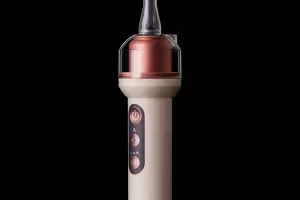
Dyson's New Toothbrush Has a Built-In Camera to Find Plaque

Paris – September 07, 2026 -- Dyson has unveiled the CameraJet, a toothbrush with a built-in camera designed to locate gaps between teeth and clean them with a targeted jet of mouthwash. The company says it is the first brush of its kind to combine camera-guided detection with precision fluid dynamics, and it goes on sale September 1, 2026, priced at 479 euros.

A tiny camera tracks gaps between teeth in real time

A 100,000-pixel macro lens camera scans the mouth during brushing, using a machine-learning system Dyson calls Gap Optical Targeting. The algorithm processes 28 live images per second to detect, track, and predict interdental gaps, then fires a cone-shaped mouthwash jet at the identified spot within 100 milliseconds. Dyson says the system runs on 16 million lines of code and was trained on 470,000 images of teeth.

This FDA-Listed Eyedrop Adaptor Cuts Drop Waste by 60% — and Could Save Patients Hundreds a Year

SHERIDAN, WYOMING – April 14, 2026 – Standard prescription eyedrop bottles have a built-in problem most patients never think about: each drop they dispense contains roughly five times more liquid than the human eye can actually hold. Up to 80% of every drop either overflows onto the cheek or drains through the tear duct into the bloodstream, meaning patients pay full price for medication that never reaches its target. A small FDA-listed device called the Nanodropper is designed to solve exactly this, attaching directly to a compatible bottle and cutting drop volume by more than 60% without replacing the bottle or altering the medication itself.